African urban greening movement partners with CitiesWithNature
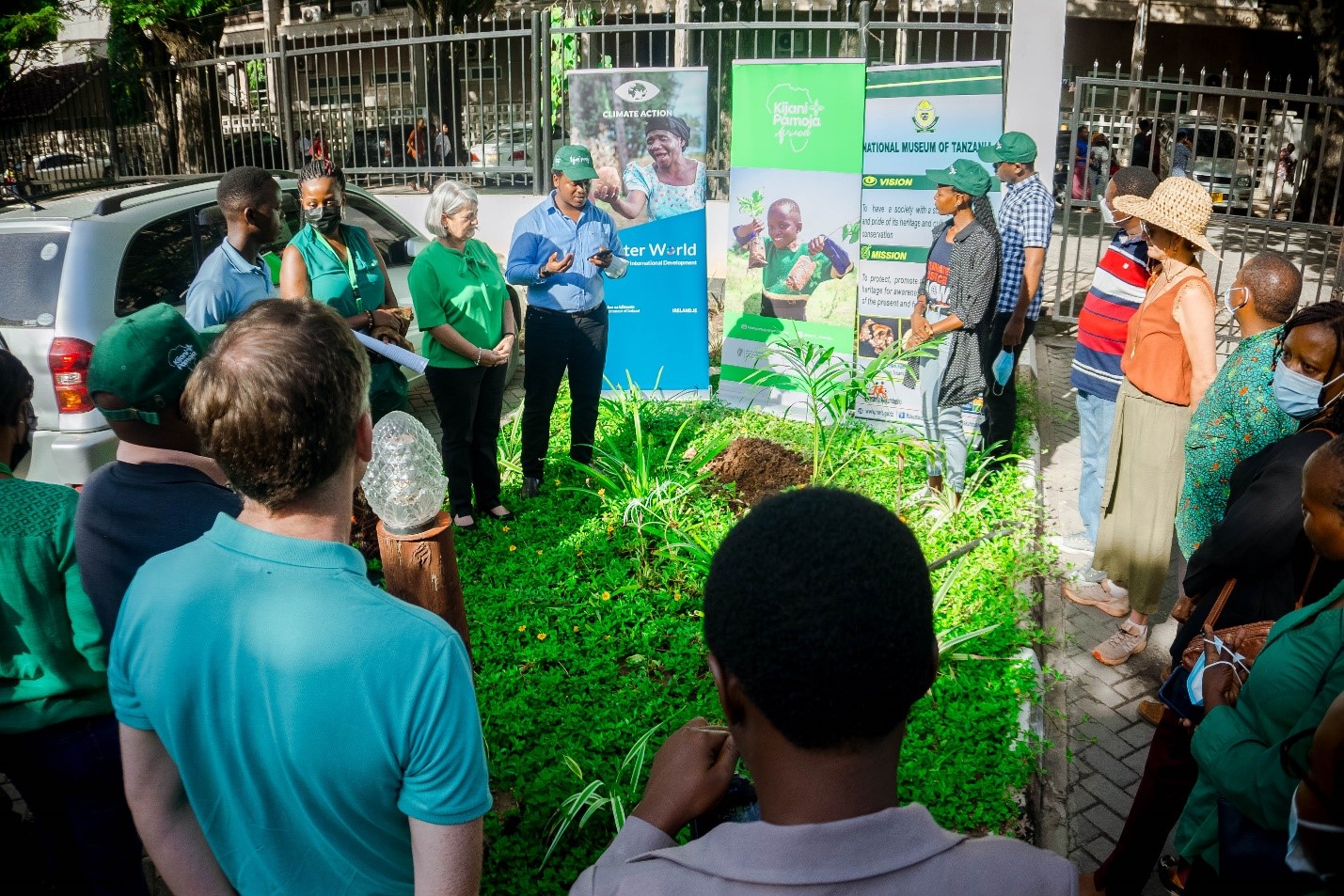
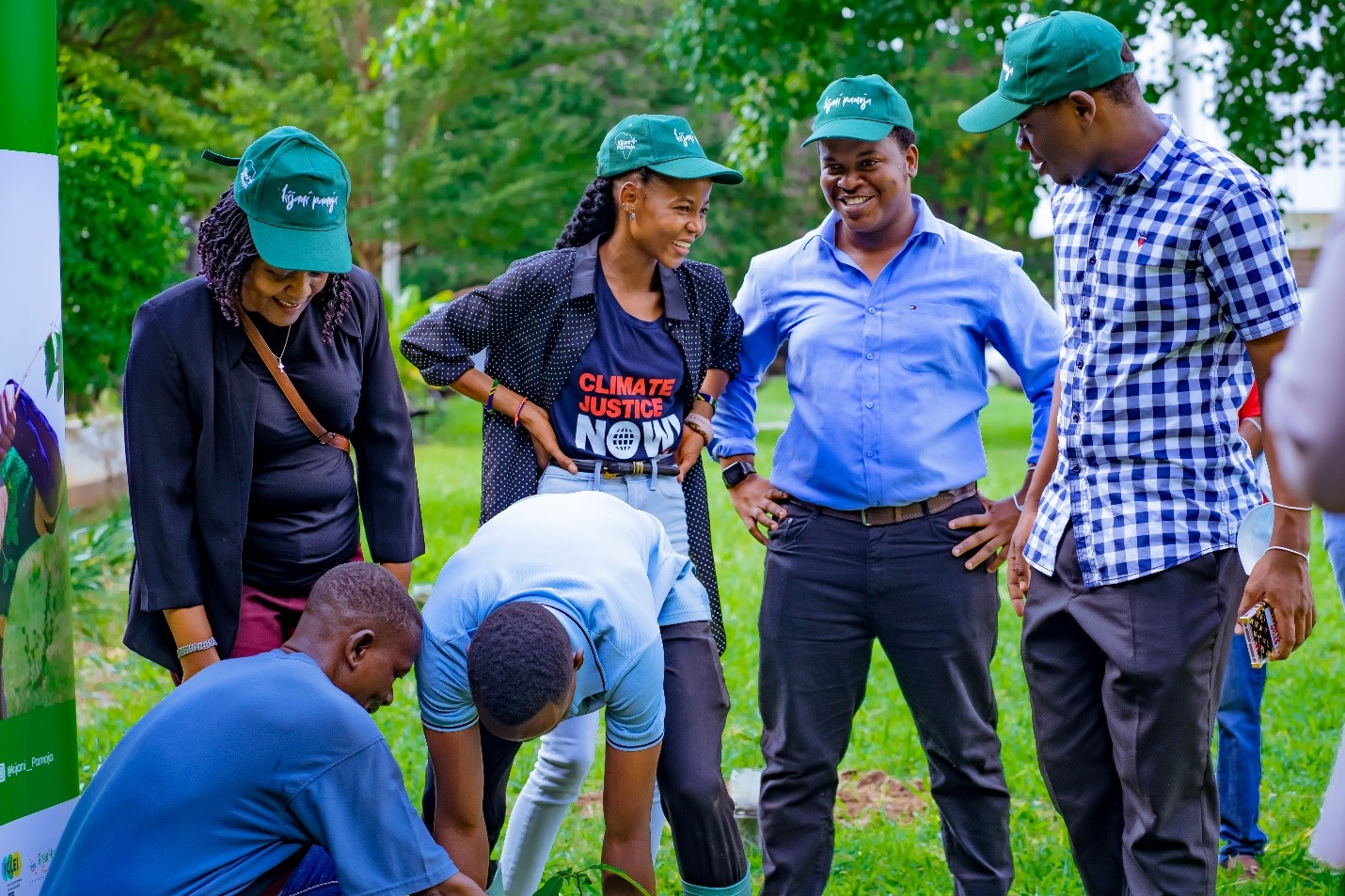
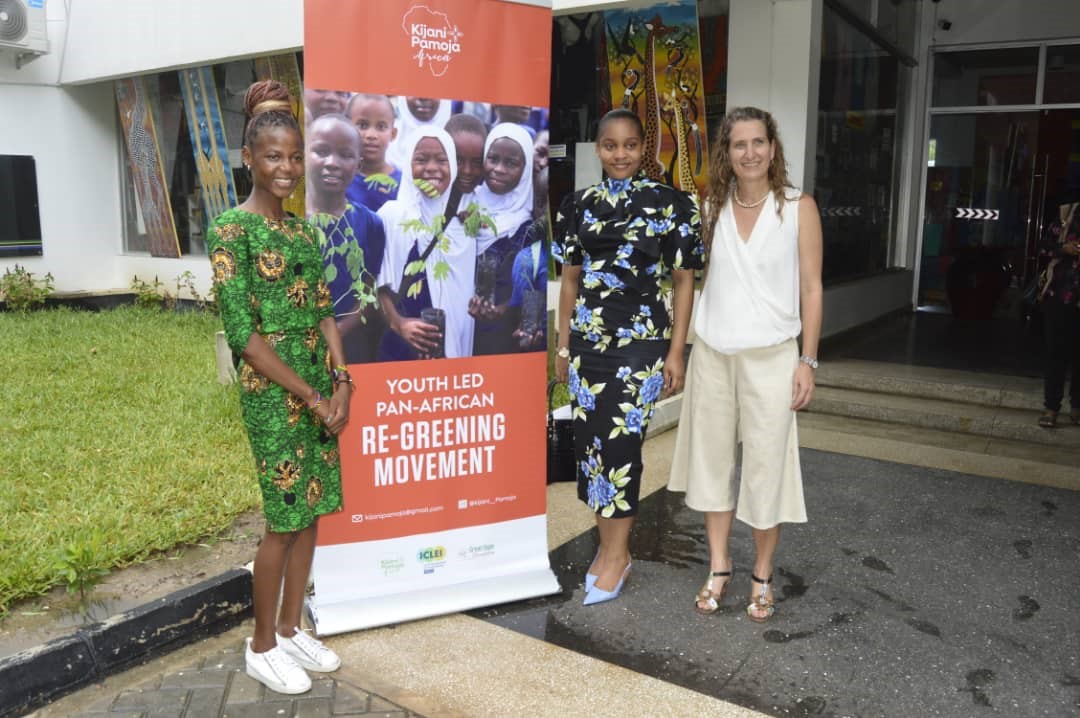
Kijani Pamoja – based in Tanzania – has joined CitiesWithNature as an official partner! Kijani Pamoja is a youth-led Pan-African re-greening movement to activate, inspire, and educate communities to regreen cities and urban spaces and care for the environment. CitiesWithNature and Kijani Pamoja will collaborate on developing and sharing practical guidance around tree planting – specifically creating Miyawaki forests – as well as awareness raising and advocacy around nature, biodiversity and Green Recovery.
Image gallery



Story and photo credit: John Namkwahe, Communication Lead at Kijani Pamoja
Dar es Salaam is estimated to lose about 10% of its trees annually according to IINTERACT-Bio’s 2019 study titled “A Thematic Atlas of Nature’s Benefits to Dar es Salaam”. The study further indicates that by 2040, Dar es Salaam will frequently experience temperatures above 36°C and therefore recommends that tree planting efforts are intensified.
A similar urban re-greening campaign was also launched in Zanzibar on 22 March, implemented by Kijani Pamoja partners to further promote the climate action agenda in the isles. The launch event brought together a number of environmental stakeholders from public entities, private institutions and development partners including embassies to Tanzania.
As a partner organization to CitiesWithNature, Kijani Pamoja aims to address some of the environmental challenges faced by other towns and cities across Tanzania and East African Community (EAC) Member States such as Kenya and Uganda in the near future.
“Protecting and enhancing urban green spaces provides huge benefits to one of Africa’s fastest growing cities. Growing and caring for trees encourages active community participation and improves the mental and physical health of people living in our cities” said Ms. Sarah Scott, the Chief Executive Officer (CEO) and Founder of the Kijani Pamoja Movement during the organization’s launch in March. Moreover, she appealed to the Tanzanian government, global donor community, private sector, and local communities to join hands and work together to eliminate the existing environmental challenges in the country.

The Tanzanian Government and environmental stakeholders operating in Tanzania including the Embassies and private sector institutions have pledged to support the Movement. In support of the movement, Ms. Jokate Mwegelo – a District Commissioner for Temeke, who officiated the movement launch on behalf of Dar es Salaam Regional Commissioner Mr. Amos Makala – said, “I am encouraged by the Kijani Pamoja mission and movement to engage various stakeholders plus communities in our country to plant trees and make our cities more livable and sustainable for the future”. She added: “We are all responsible for conserving nature for the betterment of our planet. The Government of Tanzania plays its part to conserve the environment by preserving forests and supporting environmental conservation initiatives in the country”.
The Irish Deputy Head of Mission, Ms. Mags Gaynor, emphasized the crucial role of forests in addressing climate change and protecting our planet. She added that, “Climate action is a diplomatic and development priority for Ireland. Therefore, Ireland is happy to support Kijani Pamoja in this initiative that will contribute to increasing urban forest conservation, mobilizing stakeholders, and inspiring youth to be at a forefront of the movement”.
Light pollution and its impact on migratory birds is the focus of World Migratory Bird Day 2022, a global campaign that aims to raise awareness of migratory birds and the need for international cooperation to conserve them. Activities to mark the day will be held globally under the theme “Dim the Lights for Birds at Night”.
Light pollution is increasing around the globe. More than 80 per cent of the world’s population is currently estimated to live under a “lit sky”, a figure closer to 99 per cent in Europe and North America. The amount of artificial light on the Earth’s surface is increasing by at least 2 per cent each year and could be much greater.
Natural darkness has a conservation value in the same way as clean water, air, and soil.
A key goal of World Migratory Bird Day 2022 is to raise awareness of the issue of light pollution and its negative impacts on migratory birds.
Solutions are readily available, and we hope to encourage key decision-makers to adopt measures to address light pollution.
~ Amy Fraenkel, Executive Secretary of the Convention on the Conservation of Migratory Species of Wild Animals (CMS) Tweet

Light pollution is a significant and growing threat to wildlife including many species of migratory birds. Every year, light pollution contributes to the death of millions of birds. It alters the natural patterns of light and dark in ecosystems. It can change birds’ migration patterns, foraging behaviours, and vocal communication. Attracted by artificial light at night, particularly when there is low cloud, fog, rain or when flying at lower altitudes, migrating birds become disorientated and may end up circling in illuminated areas. Depleted energy reserves put them at risk of exhaustion, predation, and fatal collision with buildings.
An enormous diversity of birds, active at night, experience the impacts of light pollution.
Many nocturnally migrating birds such as ducks, geese, plovers, sandpipers and songbirds are affected by light pollution causing disorientation and collisions with fatal consequences.
Seabirds such as petrels and shearwaters are attracted by artificial lights on land and become prey for rats and cats.
~ Jacques Trouvilliez, Executive Secretary of the Agreement on the Conservation of African-Eurasian Migratory Waterbirds (AEWA)0 Tweet

Solutions and recommendations to mitigate light pollution
Guidelines on light pollution covering marine turtles, seabirds, and migratory shorebirds were endorsed by the CMS Parties in 2020. Among their recommendations, the guidelines set forth six principles of best lighting practices and call for Environmental Impact Assessments for relevant projects that could result in light pollution. These should consider the main sources of light pollution at a certain site, the likely wild species that could be impacted, and facts about proximity to important habitats and migratory pathways.
New guidelines focusing on migratory landbirds and bats are currently being developed under CMS. They will be presented to CMS Parties for adoption at the 14th Meeting of the Conference of the Parties to CMS in 2023.
Numerous governments, cities, companies, and communities around the world are already taking steps to address light pollution.
In some cities, particularly in North America, initiatives such as “Lights Out” programmes and bird-friendly building guidelines aim to protect migrating birds from light pollution by encouraging building owners and managers to turn off any unnecessary lighting during migration periods.
World Migratory Bird Day is a call to action for international migratory bird conservation.
As migratory birds’ journey across borders, inspiring and connecting people along the way, it is our aim to use the two days in 2022 to raise awareness of the threat of light pollution and the importance of dark skies to bird migrations.
~ Susan Bonfield, Director, Environment for the Americas Tweet

More information
About World Migratory Bird Day
World Migratory Bird Day, celebrated in both May and October each year, is organized by a collaborative partnership among two UN wildlife treaties – the Convention on the Conservation of Migratory Species of Wild Animals (CMS) and the Agreement on the Conservation of African-Eurasian Migratory Waterbirds
(AEWA) – and the non-profit organization, Environment for the Americas (EFTA). The 2022 campaign is also being actively supported by the East Asian-Australasian Flyway Partnership (EAAFP) Secretariat, BirdLife International and a growing number of other dedicated organizations. World Migratory Bird Day highlights the importance of international cooperation for the conservation of migratory birds and their habitats. For the peak day in May, more than 200 registered events in over 30 countries to mark World Migratory Bird Day 2022 will include bird festivals, education programmes, media events, bird watching trips, presentations, film screenings and a benefit concert to raise funds for international nature conservation.
These events are hosted by governments, parks, schools, libraries, and numerous other groups and range from bird walks to educational workshops and festivals. Some events are offered virtually.
In the Americas, upcoming virtual events include an expert-led webinar on bird migration hosted by the National Audubon Society and a conversation with bird-glass collision researcher and author Daniel Klem Jr. hosted by Environment for the Americas on May 12th. There will be a virtual art activity and reading of the children’s book What if Night? with author Paul Bogard and illustrator Sarah Holden on May 13th.
The East Asian-Australasian Flyway Partnership (EAAFP) established a special WMBD Small Grant Fund to provide financial support to EAAFP Partners and collaborators to raise awareness on the need of conserving migratory waterbirds and the value of their habitats in the East Asian – Australasian Flyway. The EAAFP also published a special newsletter to mark World Migratory Bird Day 2022.
Why celebrate World Migratory Bird Day on two days?
Traditionally observed on the second Saturday of May and October, the two celebrations of World Migratory Bird Day are a way to reflect the cyclical nature of bird migration as well as the fact that there are varying peak migration periods in the northern and southern hemispheres. The two-day observance of World Migratory Bird Day also gives more people the chance to celebrate and contemplate migratory birds during peak migration times in different parts of the world.
www.worldmigratorybirdday.org
About the Convention on Migratory Species (CMS)
An environmental treaty of the United Nations, the Convention on the Conservation of Migratory Species of Wild Animals (CMS) provides a global platform for the conservation and sustainable use of migratory animals and their habitats. This unique treaty brings governments and wildlife experts together to address the conservation needs of terrestrial, aquatic, and avian migratory species and their habitats around the world. Since the Convention’s entry into force in 1979, its membership has grown steadily to include 133 Parties from Africa, Central and South America, Asia, Europe and Oceania.
www.cms.int @bonnconvention
About the African-Eurasian Migratory Waterbird Agreement (AEWA)
The Agreement on the Conservation of African-Eurasian Migratory Waterbirds (AEWA) is an intergovernmental treaty dedicated to the conservation of migratory waterbirds that migrate along the African-Eurasian Flyway. The Agreement covers 255 species of bird ecologically dependent on wetlands for at least part of their annual cycle. The treaty covers 119 range States from Europe, parts of Asia and Canada, the Middle East and Africa. As of today, AEWA currently has 82 Parties, 44 from Eurasia (including the European Union) and 38 from Africa.
www.unep-aewa.org @UNEP_AEWA
Environment for the Americas (EFTA)
EFTA is a Colorado-based non-profit organization that provides bilingual educational materials and information about birds and bird conservation to raise awareness of migratory birds and to promote actions that protect migratory birds throughout the Americas.
https://www.environmentamericas.org/
Related links:
CMS COP13 Resolutions and Decisions on Addressing Light Pollution:
To implement nature-based solutions successfully in urban areas we need smart policies and effective ways of working together with many different stakeholders. The Urban Nature Atlas is a great place to learn from various nature-based solutions that cities have already implemented. Take a look at this database developed by CitiesWithNature partner organisation Naturvation below.
But what policy instruments can we use in cities to encourage nature-based solutions such as ecosystem restoration or sustainable urban drainage systems? A new database, the Urban Governance Atlas, will provide proven policy instruments. They are inviting people to nominate policy instruments that could be included in the database until 30 June:
The Urban Governance Atlas (UGA) will be an interactive online database of around 250 good practice policy instruments that support the use of nature-based solutions (NBS) for urban ecosystem restoration and more inclusive green space planning. The first database of its kind, the UGA will allow users to explore a different kinds of policy instruments being applied across the world, especially those coming from countries in the EU and Latin America. By focusing on instruments that have been proven to work well, the UGA will support cities to become greener and more inclusive and serve as a resource for civil society, the scientific community, and wider audiences.
In addition to serving as a resource, the UGA provides an opportunity for you to share your knowledge and be part of a global community working on NBS. By helping us to fill in the UGA, your organization or project logo can also be featured on the website! Sound interesting?

- Nominate policy instruments for us to include in the database (email these to mckenna.davis@ecologic.eu); and
- Fill out a short questionnaire per instrument (for more information, visit our informational page and watch our short introductory video)
For any questions, please contact mckenna.davis@ecologic.eu. Thank you for your support and we look forward to hearing from you!
Nominations and inputs are welcome until 30 June 2022.
Source: https://oppla.eu/urban-governance-atlas-call-contributions
What's in a name?
Speaking of nature-based solutions, what exactly are they? Definitions matter and there has been a fair amount of debate about how nature-based solutions should be defined. At the UN Environment Assembly earlier this year, the following definition was adopted:
Nature-based solutions are ‘actions to protect, conserve, restore, sustainably use and manage natural or modified terrestrial, freshwater, coastal and marine ecosystems, which address social, economic and environmental challenges effectively and adaptively, while simultaneously providing human well-being, ecosystem services and resilience and biodiversity benefits.’
CitiesWithNature offers the latest NbS tools & resources
The Tools & Resources Hub on the CitiesWithNature platform provides easy access to a wide range of reliable resources and cutting-edge tools on nature-based solutions. All in one place, and for free.

Montréal in Canada is leading the way by weaving nature into its urban fabric. The city, which hosts the Secretariat of the UN Convention on Biological Diversity (CBD), works on various initiatives to protect ecosystems, promote nature in the city and encourage residents to take part in local initiatives, as part of the city’s ecological transition.

Not only was Montréal among the pioneer cities to join CitiesWithNature, the CitiesWithNature initiative was launched in Montréal in 2018 at the ICLEI World Congress by the founding partners ICLEI – Local Governments for Sustainability, the International Union for Conservation of Nature (IUCN) and The Nature Conservancy (TNC).
Montréal’s city profile on CitiesWithNature, introduces the city’s considerable nature initiatives and key policies, plans and projects that they have shared on their Nature Pathway.
One of these initiatives is Montréal’s shiny new insectarium that aims to connect people with nature through an innovative approach. The insectarium is the first museum in North America that provides people the opportunity to get up close to living insects as they move around freely in immersive habitats. Montréal’s Mayor, Valerie Plante, recently opened the redesigned space.
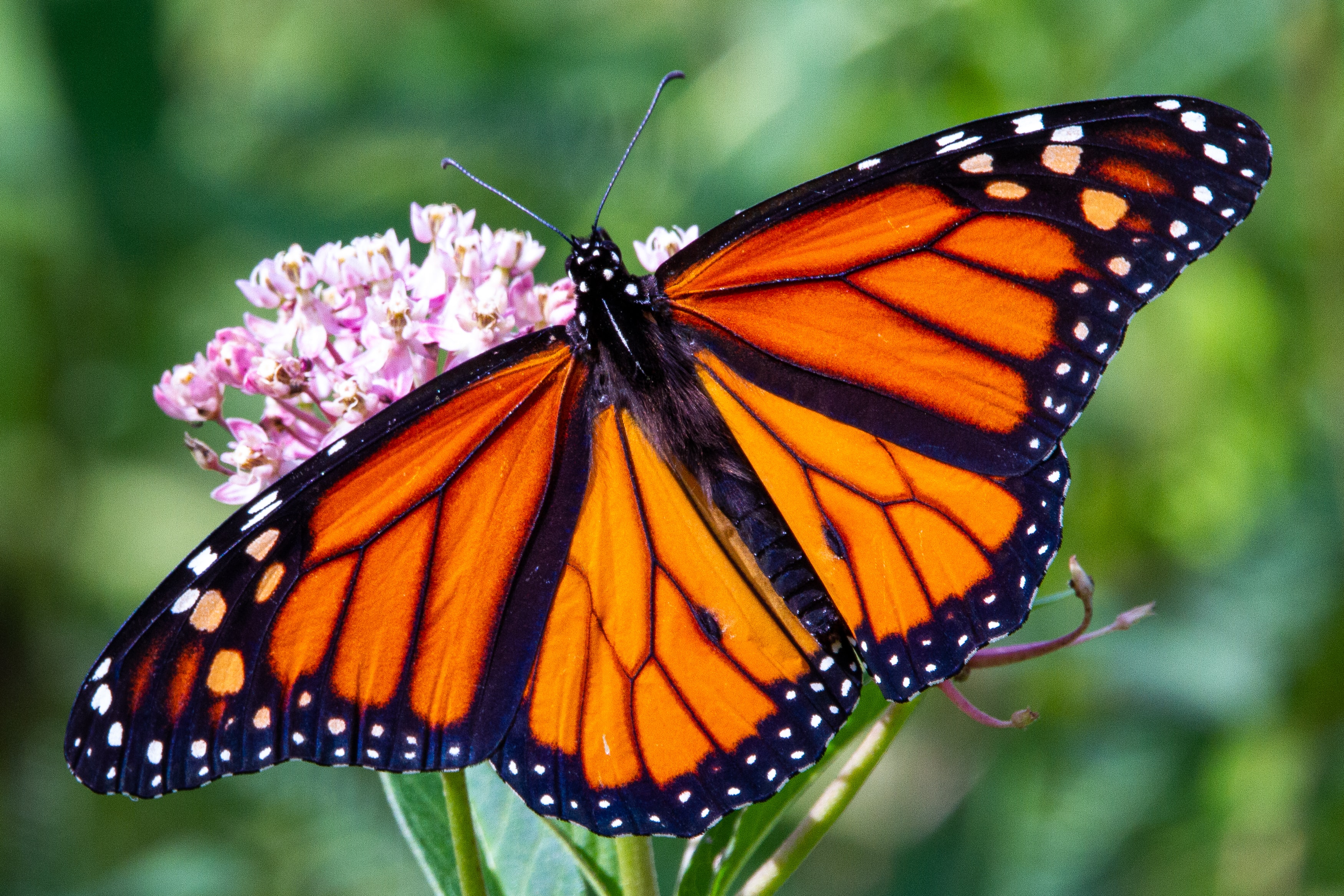
One of the iconic insects featured at the insectarium is the monarch butterfly. This eye-catching species is renowned for its long-distance migration from Canada through the USA to Mexico. Given this migration pattern, the local actions of cities and citizens matter on a global level: protecting the monarch’s habitat and its food plants throughout North America is essential for the survival of this species.
Similarly, another leading CitiesWithNature city, San Antonio in Texas, planted the North American Friendship Garden in collaboration with counterparts from Mexico and Canada. This garden includes a pollinator garden to provide a sanctuary for monarch butterflies during their international migration. Read more about this inspiring initiative.
Photos by Joshua J. Cotten on Unsplash
Here on the CitiesWithNature platform, over 200 cities from around the world are connecting, sharing their experiences and actions, and benefiting from access to a range of partner organisations and practical tools.
CitiesWithNature enables local governments and their partners to:
– Showcase their city’s actions and plans, understand how they contribute to global nature goals and easily track their achievements on the Action Platform
– Integrate nature throughout their city’s plans, policies and operations via the Nature Pathway
– Access cutting-edge tools and resources on nature-based solutions, ecosystem restoration and biodiversity conservation on the Tools & Resources Hub
– Get practical guidance on key topics such as resilience and catchment management via the Guides
– Connect with other cities and leading international partner organisations
– Share their city’s nature work with a global audience
Not yet part of CitiesWithNature? It’s easy and free to join. Watch this tutorial to see how to register your city and activate your account on CitiesWithNature:
Your City Profile is where you can showcase your city’s nature work and where all your activities on the platform are gathered. The basic information that cities can upload on their City Profiles is a photo of the mayor, a short overview of the city, its natural features and biodiversity work, relevant social media channels, and some photos of natural areas and biodiversity initiatives that the city is proud of.
In addition to this standard information, cities use the Nature Pathway to share key documents such as their Environmental Strategy, Local Biodiversity Strategy and Action Plan, etc., to showcase their work and inspire other cities.
On the Tools and Resources Hub, cities can also share specific tools or resources such as guidelines, handbooks or case studies.
Lastly, cities can also post news updates, photos, videos or weblinks on their City Profiles.
Check out the inspiring profiles of these cities: Barcelona, Cape Town, Montreal, San Antonio TX, Baia Mare and West Torrens in Adelaide.
The Tools & Resources Hub on the CitiesWithNature platform provides easy access to a wide range of reliable resources and cutting-edge tools on nature-based solutions. All in one place, and for free. See what tools and resources we have on nature-based solutions.
What is the Nature Pathway?
The Nature Pathway is a comprehensive roadmap that helps you to integrate nature throughout your city’s plans, policies and operations. It is based on a tried-and-tested ICLEI methodology and provides step-by-step guidance and tools for mainstreaming biodiversity in your city. On the Nature Pathway you will find useful examples of policies, plans, projects and tools from other cities and leading international organizations. You can also showcase your city’s own work and inspire others by uploading relevant documents as you progress along the Nature Pathway.
The new-look Nature Pathway features an intuitive interface, easy navigation and new functions. Keep an eye out for the new tutorial on the site, which explains all the different parts of the Nature Pathway.
Sign up to our monthly newsletter!
The CitiesWithNature and RegionsWithNature Buzz Newsletter is a monthly roundup of important news, events and new insights about what local and regional governments – and their partners – are doing to boost nature and benefit people.
Visit our sister platform, RegionsWithNature
Regional governments like provinces and states are uniquely positioned to promote nature-positive development at the landscape scale and across urban-rural linkages. RegionsWithNature will support regional government officials and other stakeholders to enhance ecosystem restoration, biodiversity conservation and nature-based solutions in their regions. Read more here.
Photo by Krisztina Papp on Unsplash
Learn how participating cities can publish their nature and biodiversity commitments and progress on the CitiesWithNature Action Platform, share their journey with other cities, and use the Action Platform to generate reports and inform decision making in their own council and community.
Join leading Australian cities at this webinar hosted by ICLEI Oceania to learn more about their nature work and for a demonstration of the new CitiesWithNature Action Platform.
Wednesday 6 April at 4pm – 5:15pm AEST
Virtual Zoom Event
Register free here.
This webinar will demonstrate how to use the Platform and feature some updates from several cities in preparation for populating the Action Platform.
Speakers will include:
– Cr Amanda Stone, Councillor, Yarra City Council, Melbourne
– ICLEI Cities Biodiversity Centre
– Melbourne
– West Torrens
– Wollongong
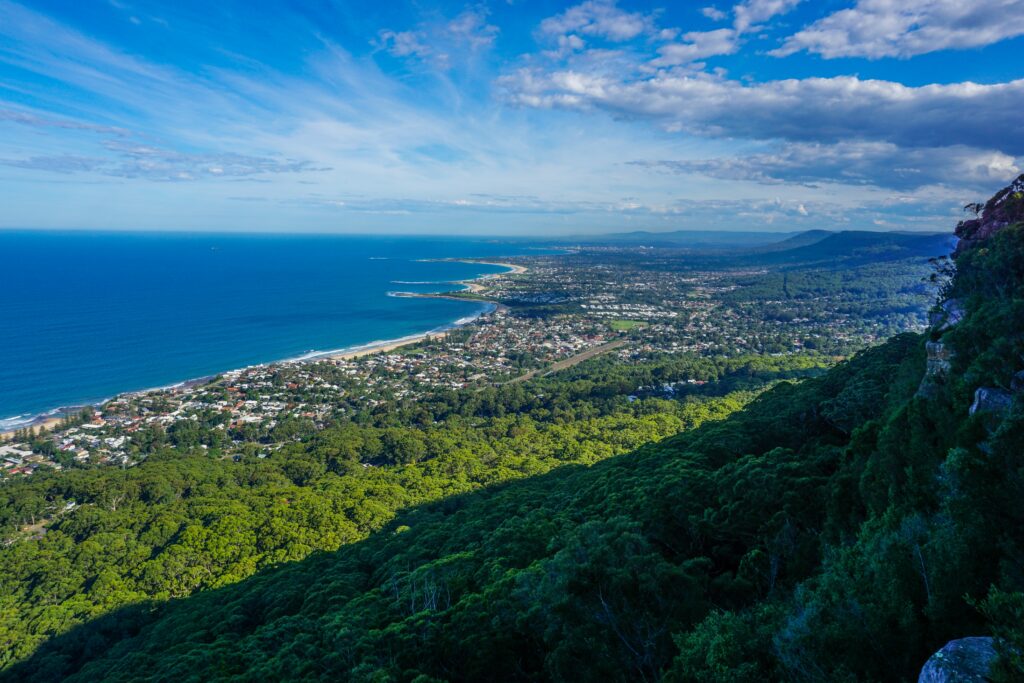
Sublime Point Lookout, Maddens Plains, near Wollongong, Australia. Image credit: https://unsplash.com/photos/0v7BeBsQhCY
Why should cities commit and take action for nature on the CitiesWithNature Action Platform?
CitiesWithNature Action Platform recognises the critical role cities play in protecting and restoring nature
Why do we need nature to make our cities more sustainable and resilient?
- By 2050, two thirds of people will live in urban areas.
- People depend on healthy ecosystems for food, livelihoods, health and wellbeing.
- By integrating nature into our cities, we enhance community resilience to global challenges like climate change, and enable people and biodiversity to thrive.
- There is a growing urgency for collective and large-scale action to protect the biodiversity in and around cities to prevent irreversible loss and damage to the natural systems we depend on.
- Now more than ever, we must unite and embrace nature, reconnect communities with nature, and become CitiesWithNature!
Why are the world’s biodiversity goals important for cities?
- Through the United Nations Convention on Biological Diversity (UN CBD), countries commit to a new and ambitious blueprint, the post-2020 global biodiversity framework (GBF), to guide actions for protecting nature and its vital contributions to people.
- The GBF has a whole-of-government approach and recognizes that cities and subnational governments are key to its successful implementation.
- In the 2030 Action Targets, the GBF sets out clear targets for urgent actions we must take in the next decade, so that people may live in harmony with nature and thrive.
How can CitiesWithNature help cities to thrive with nature?
- CitiesWithNature is a unique initiative that recognizes and enhances the value of nature in and around cities across the world.
- Its platform enables cities to connect, share their experiences and actions, and benefit from access to many partner organizations, best practices, resources and practical tools.
- CitiesWithNature and its Action Platform are recognized by the Convention on Biological Diversity (CBD) in the Plan of Action on Subnational Governments, Cities and Other Local Authorities for Biodiversity (2021-2030).
- The CitiesWithNature Action Platform complements the CBD’s Sharm-el Sheikh to Kunming Action Agenda for Nature and People.
- The Action Platform also links with the Commitments for Nature platform of the UN Environment Programme World Conservation Monitoring Centre, which gathers area-based commitments.
What contribution can cities make?
- Cities are where most people live, where new ideas germinate, where most of the consumption that threatens nature takes place, and where many decisions are made, reaching far beyond the city limits.
- Local and subnational governments have direct contact with the people who live in their cities, allowing for more concrete and strategic action on the ground.
- Local and subnational governments have the power to integrate nature into the way cities work.
- They can do this through policy reform, advocacy, investment, and on-the-ground interventions.
- They can do this for land use and urban development planning; infrastructure development and maintenance; management of consumption including agriculture, water and industry; resource mobilization; and urban response to disasters and risks – ultimately improving health and wellbeing.
- 2030 Action Targets, the GBF sets out clear targets for urgent actions we must take in the next decade, so that people may live in harmony with nature and thrive.
What is the Action Platform?
- The CBD recognizes the CitiesWithNature Action Platform in its Plan of Action on Subnational Governments, Cities and Other Local Authorities for Biodiversity (2021-2030 as the place where cities will monitor and report on their voluntary commitments to national and global biodiversity targets.
- Through the Action Platform, cities can showcase their actions and plans, understand how they contribute to global nature goals and easily track their achievements.
- The Action Platform translates the post 2020 global biodiversity framework into commitments that cities and regions are willing to make, taking specific actions under the commitments and setting targets for a particular action most relevant to the city’s local context.
- It has 3 action areas that align with the categories of the CBD 2030 Action Targets: to protect and restore nature; use nature sustainably; and develop tools and solutions.
- , the GBF sets out clear targets for urgent actions we must take in the next decade, so that people may live in harmony with nature and thrive.
How cities can make their mark through the Action Platform
Level 1: Make a COMMITMENT
- A city can show its commitment to take action on specific topics such as nature areas, recycling and access to parks.
- All commitments are voluntary but will contribute towards achieving global and national targets for protecting and restoring nature.
- After making commitments, cities can move on to the next step: Taking specific actions and setting specific targets aligned with their local and regional context and priorities.
Level 2: Take specific ACTIONS to achieve a commitment
- After making a particular commitment, a city can identify what actions they will take to achieve it.
- For example, after committing to “Protect, connect and restore ecosystems”, a city can specify how it will achieve this by taking actions such as “Increase protected areas” or “Restore degraded areas.”
- These actions should align with the city’s biodiversity plans, policies and strategic direction, as well as subnational and national biodiversity strategies and action plans.
- They should be implemented at the city’s pace, considering capacity and resources.
Level 3: Set specific TARGETS to monitor progress
- After making a commitment, and identifying the actions to be taken, cities can then set targets to track their progress.
- For each action, a city can set a specific target for what it wants to achieve by 2030. For example, “By 2030, protected areas will cover 4% of the city’s jurisdiction.”
- For each target, a city must also set a baseline. For example, “Currently protected areas cover 2% of the city’s jurisdiction.”
Linking the three levels of the Action Platform
- Commitments, actions and targets are the three levels of the Action Platform geared to help you in your journey towards achieving sustainability goals. For example:
- Commitment: Our city commits to protect, connect and restore ecosystems.
- Action: We will achieve this commitment by taking the action of increasing protected areas in our city.
- Target: By 2030, protected areas will cover 4% of the city.
Calling all cities to take action!
- By using the Action Platform, cities can inspire each other and show the world what actions they are taking for nature and people. They can monitor and track their progress, and see how their actions compare with other cities in their country, region or continent.
- The Action Platform also helps cities to gather information to feed into their countries’ National Biodiversity Strategies and Action Plans. This helps their countries to achieve national priorities and simplify their reporting to the UN CBD.
- Join CitiesWithNature and use the Action Platform to unite with other cities around the world – to ensure healthier, happier and safer cities for a nature-positive future.
CitiesWithNature Action Platform launch on Earth Hour 2022: Support from partners
NEW #CitiesWithNature Action Platform aims to accelerate action by cities #ForNature, launching this #EarthHour💚@ICLEI @IUCN & @nature_org are inviting all #cities to join and share their achievements🏙️🌳https://t.co/WRMpqAtnXg pic.twitter.com/ENy9Fp08CR
— ipbes (@IPBES) March 25, 2022
The new #CitiesWithNature Action Platform aims to accelerate action by cities #ForNature 🌏🏙️
— Global Environment Facility (GEF) (@theGEF) March 28, 2022
The platform has 3 action areas: 1️⃣ protect & restore nature, 2️⃣ use nature sustainably, 3️⃣ develop tools and solutions.
📗https://t.co/CotRJIT6KE
via: @ICLEI @IUCN @nature_org pic.twitter.com/aoMVtw5v9l
The #CitiesWithNature Action Platform accelerates bold ACTION by cities #ForNature, launching #TODAY @ #EarthHour🌍💡
— Cities Alliance (@CitiesAlliance) March 26, 2022
Calling all #cities to join, commit & share their achievements! ⏬https://t.co/ImevaPnqIV@earthhour @ICLEI @IUCN @nature_org @UNBiodiversity @CitiesWNature🌱 pic.twitter.com/7vnFBAi8lf
Why should cities commit & take action for nature on the #CitiesWithNature Action Platform this #EarthHour?
— ICLEI (@ICLEI) March 26, 2022
By using the Platform, your city can inspire others and show the world what actions you're taking #ForNature and the peoplehttps://t.co/ZzKv29OI3A #GenerationRestoration pic.twitter.com/vvUavuYZPr
Why should cities commit & take action for nature on the #CitiesWithNature Action Platform this #EarthHour? 💚
— ICLEI USA (@ICLEI_USA) March 27, 2022
By using the Platform, your city can inspire others & show the world what actions you're taking #ForNature & people 🏙️🌲https://t.co/PLNL39TJrT #GenerationRestoration pic.twitter.com/myWtP1SWwG
Launching this #EarthHour, the @CitiesWNature Action Platform has 3 action areas that align with the categories of the @UNBiodiversity 2030 Action Targets:
— #NatureForAll (@natureforall) March 26, 2022
🌱 Protect & restore nature
♻️ Use nature sustainably
💡 Develop tools & solutionshttps://t.co/M8oiwS2PVq#CitiesWithNature pic.twitter.com/3ICaiIOTR4
É amanhã! Apague as luzes das 20h30 às 21h30 horário local! #HoraDoPlaneta #EarthHour #CitiesWithNature #ForNature https://t.co/q07HKp7aTn
— ICLEI América do Sul (@ICLEI_SAMS) March 25, 2022
@MiamiMayor Suarez highlights the importance of the @CityofMiami's actions #ForNature, including climate adaptation & #NatureBasedSolutions.
— ICLEI USA (@ICLEI_USA) March 26, 2022
He also calls on cities to join #CitiesWithNature & share their action on the Action Platform this #EarthHour 💚https://t.co/R3ZsSfYH4D
New #CitiesWithNature platform launching today @EarthHour @IPBES @iucn @nature_org https://t.co/gZL3t4oDf3
— LearnFromNature_ (@HenricusNature) March 26, 2022
É amanhã! Apague as luzes das 20h30 às 21h30 horário local! Escute o recado da Vice-Prefeita do Recife, @isabelladroldao!!!@prefrecife#HoraDoPlaneta #EarthHour #CitiesWithNature #ForNature https://t.co/NI3MQxA4RQ
— ICLEI América do Sul (@ICLEI_SAMS) March 25, 2022
📢 TODAY with #EarthHour
— Convention on Migratory Species (CMS) (@BonnConvention) March 26, 2022
↗️ Launch of #CitiesWithNature Action Platform
A place for #cities to highlight the critical role they play in implementing protection and restoration measures #ForNature
👉Learn more https://t.co/ZFQE6F1UBr pic.twitter.com/mzFxnApGRI
Why do we need nature to make our cities more sustainable and resilient? 🌱
— UN Biodiversity (@UNBiodiversity) March 27, 2022
People depend on healthy ecosystems for food, livelihoods, health, wellbeing and more.
Learn more about the newly-launched #CitiesWithNature Action Platform #ForNature. 💚
➡️ https://t.co/oxvl5l6d1V pic.twitter.com/6yxHE1Oh8a
How do #cities meet the challenge of #ClimateChange and #BiodiversityLoss?
— WWF Cities (@WWFCities) March 24, 2022
Join @ICLEI's #CitiesWithNature platform to be part of the effort to increase collective action and to contribute towards a more #NaturePositive world. https://t.co/ijpVcHxmiI pic.twitter.com/qDA0OmCawy
"Cities are on the frontline of the challenges we face as far as #biodiversity is concerned."
— UN Biodiversity (@UNBiodiversity) March 24, 2022
At the Geneva Meetings, @UNBiodiversity's David Ainsworth spoke to @ICLEICBC's Ingrid Coetzee about the #CitiesWithNature Action Platform and more!
➡️https://t.co/rhqE9Rc0Vk#Post2020 pic.twitter.com/tPSxoTvENG
Cities are key to addressing the biodiversity crisis. The #CitiesWithNature Action Platform launched today gives them the support they need to accelerate their efforts on this #EarthHour2022 https://t.co/WcYyYGpkp8
— Amanda Stone (@AmandaStoneGRN) March 25, 2022
Why should cities commit & take action for nature on the #CitiesWithNature Action Platform this #EarthHour? 💚
— ProGIreg (@proGIreg) March 28, 2022
By using the Platform, cities can inspire others & show the world what actions you're taking #ForNature & people 🏙️🌲https://t.co/TxpgKi8Ll4 #GenerationRestoration pic.twitter.com/GvQFdkGf9d
Why should cities commit & take action for nature on the #CitiesWithNature Action Platform this #EarthHour? 💚
— NetworkNature (@NetworkNatureEU) March 26, 2022
By using the Platform, cities can inspire others & show the world what actions you're taking #ForNature & people 🏙️🌲https://t.co/QEupNK9e4E #GenerationRestoration pic.twitter.com/POXAz3Y9YY
Why do we need nature to make our cities more sustainable and resilient?
— Caribbean disaster (@BagalueSunab) March 28, 2022
People depend on healthy ecosystems for food, livelihoods, health, wellbeing and more.
Learn more about the newly-launched #CitiesWithNature Action Platform #ForNature.
➡️ https://t.co/wR0VmoTvyF pic.twitter.com/c7aLrAELnc
Launching this #EarthHour, the #CitiesWithNature Action Platform has 3 action areas that align with the proposed Action Targets of the #post2020 framework:
— UN Biodiversity (@UNBiodiversity) March 26, 2022
🌱 Protect and restore nature
🌱 Use nature sustainably
🌱 Develop tools and solutions
Learn more:https://t.co/Lj0v3AUiUm pic.twitter.com/DcACgSbr3u
Mayor @geordinhl, @CityofCT speaks about the importance of #EarthHour, happening tonight at 8:30pm 🌍
— ICLEI Africa (@ICLEIAfrica) March 26, 2022
DYK #CapeTown is considered to be the most biodiverse city in the world? #ForNature
And the #CitiesWithNature Action Platform is launching today! 💚 https://t.co/LrVSmMLFnW pic.twitter.com/E7q6Nekjdt
Featured at #Geneva Meetings: #CitiesWithNature Action Platform launch this #EarthHour 💚@UNBiodiversity's David Ainsworth spoke to @IngridICLEI_AS about why global biodiversity goals are important for cities.#Post2020 #ForNature #UnitedforBiodiversityhttps://t.co/xL7BiLYulW
— CitiesWithNature (@CitiesWNature) March 24, 2022
"Cities are key to the successful implementation of the #post2020 global biodiversity framework." 🌳🏢
— UN Biodiversity (@UNBiodiversity) March 26, 2022
This #EarthHour, @UNBiodiversity Executive Secretary @mremae welcomes the launch of the #CitiesWithNature Action Platform.
Learn more:https://t.co/Lj0v3ACHvM#ForNature 💚 pic.twitter.com/Hz1xgfhK8r
The successful implementation of the #post2020 global #biodiversity framework requires a whole-of-government approach, and cities and subnational governments have a vital role to play.
— Elizabeth M. Mrema (@mremae) March 26, 2022
This #EarthHour, I welcome the #CitiesWithNature Action Platform.
➡️ https://t.co/Dy8Wi8Uq6v pic.twitter.com/8757NEocuA
Why are the world’s biodiversity goals important for cities?
— CLEVER Cities (@CLEVER_Cities) March 28, 2022
The #post2020 global biodiversity framework has a whole-of-government approach & recognizes that cities are key!
Launched on #EarthHour, the #CitiesWithNature Action Platform #ForNature 💚 https://t.co/W02MWerfNt pic.twitter.com/lNjY6nQAax
Why do we need nature to make our #cities more #sustainable and #resilient?
— Cities Alliance (@CitiesAlliance) March 24, 2022
The #CitiesWithNature Action Platform accelerates bold ACTION by cities #ForNature🌱
Launching this #EarthHour - 26 March. Stay tuned!https://t.co/R3B4oqW4Zn@ICLEI @IUCN @nature_org @UNBiodiversity pic.twitter.com/T2WVO0DqoR
Why should cities commit & take action for nature on the #CitiesWithNature Action Platform this #EarthHour? 💚
— #NatureForAll (@natureforall) March 26, 2022
By using the Platform, your city can inspire others & show the world what actions you're taking #ForNature & people 🏙️🌲
➡️https://t.co/M8oiwS2PVq#GenerationRestoration pic.twitter.com/fle8wa4ScT
Why should cities commit & take action for nature on the #CitiesWithNature Action Platform this #EarthHour? 💚
— NICE NbS (@NICE_NbS) March 26, 2022
By using the Platform, cities can inspire others & show the world what actions you're taking #ForNature & people 🏙️🌲https://t.co/Mvb194Akbf #GenerationRestoration pic.twitter.com/jpAdV2PQZ1
The #CitiesWithNature Action Platform accelerates bold action by cities #ForNature, launching this #EarthHour! Recognized by @UNBiodiversity 🌱
— ICLEI USA (@ICLEI_USA) March 26, 2022
Calling all #cities to join, commit & share their achievements!https://t.co/PLNL39TJrT
Founding partners: @ICLEI @IUCN @nature_org pic.twitter.com/uc2A4TGhWx
ACTION #ForNature 💚
— ICLEI (@ICLEI) March 26, 2022
Launching this #EarthHour, the #CitiesWithNature Action Platform has 3 action areas that align with the categories of the @UNBiodiversity 2030 Action Targets:
Protect & restore nature
Use nature sustainably
Develop tools & solutionshttps://t.co/ZzKv29OI3A pic.twitter.com/Or3DkI2ia7
É amanhã! Apague as luzes das 20h30 às 21h30 horário local! #HoraDoPlaneta #EarthHour #CitiesWithNature #ForNature https://t.co/q07HKp7aTn
— ICLEI América do Sul (@ICLEI_SAMS) March 25, 2022
Today, our partner @CitiesWNature launches its Action Platform, which has 3 action areas that align with the categories of the @UNBiodiversity 2030 Action Targets:
— AIPH (@AiphGlobal) March 26, 2022
🌱Protect & restore nature
🌱Use nature sustainably
🌱Develop tools & solutionshttps://t.co/kSG9oDzV7X #EarthHour
CitiesWithNature Action Platform launch on Earth Hour 2022: Support from leaders
Mayor @Val_Plante, @MTL_Ville, calls on cities to take action against climate change & biodiversity loss, & invites us to turn off the lights for #EarthHour tonight!
— CitiesWithNature (@CitiesWNature) March 26, 2022
DYK our #CitiesWithNature Action Platform #ForNature is launching today? 💚https://t.co/UbO2TcQCBA@WWFCities pic.twitter.com/bGaC43mB88
Mayor @FrancisSuarez, @CityofMiami, highlights #Miami's actions #ForNature, including climate adaptation & #NatureBasedSolutions.
— CitiesWithNature (@CitiesWNature) March 26, 2022
He also calls on cities to join #CitiesWithNature & share their action on the Action Platform this #EarthHour 💚https://t.co/UbO2TcQCBA @MiamiMayor pic.twitter.com/j1BuUmhrlR
Sayda Rodríguez Gómez, Secretary of Sustainable Development, @gobiernoyucatan, calling on cities to take action for our biodiversity & climate crises this #EarthHour 🌎#CitiesWithNature Action Platform to take ACTION #ForNature 💚https://t.co/UbO2Tcz1d0@ICLEImx @ICLEI @Edomex pic.twitter.com/HvBj2QBBDw
— CitiesWithNature (@CitiesWNature) March 24, 2022
Launching this #EarthHour, the #CitiesWithNature Action Platform to take ACTION #ForNature 💚
— CitiesWithNature (@CitiesWNature) March 23, 2022
Councilor @AmandaStoneGRN from @YarraCouncil calls on cities to JOIN, make commitments & take action this #EarthHour!
More info here: https://t.co/UbO2Tcz1d0@iclei_oceania @ICLEI pic.twitter.com/fXgAaA2I0y
#Citieswithnature brings cities and regions together to share their biodiversity successes. The new Action Platform will accelerate those efforts, launched soon!https://t.co/7BSkUXuUAD
— Amanda Stone (@AmandaStoneGRN) March 23, 2022
Cities are key to the successful implementation of the post-2020 global biodiversity framework. We welcome the opening of the #CitiesWithNature Action Platform, which is recognized by @UNBiodiversity. - @mremae
— CitiesWithNature (@CitiesWNature) March 21, 2022
Launching this #EarthHour #ForNature 💚 https://t.co/UbO2TcQCBA pic.twitter.com/kULf3K2C8z
Mayor @CityofCT, @geordinhl, speaks about the the importance of #EarthHour!#CapeTown is one of our #CitiesWithNature Pioneers & considered to be the most biodiverse city in the world! #ForNature
— CitiesWithNature (@CitiesWNature) March 25, 2022
DYK our Action platform is launching this #EarthHour? 💚 https://t.co/UbO2TcQCBA pic.twitter.com/Oi21iqOQAg
Deputy mayor of Recife, @isabelladroldao, calls on everyone to join #EarthHour!
— CitiesWithNature (@CitiesWNature) March 25, 2022
Join the movement, turn off your lights & reconnect with our planet at 8:30pm 🌎 #ForNature
Explore the #CitiesWithNature Action platform, launching tomorrow 💚 https://t.co/t1F4y86YS6 @ICLEI_SAMS pic.twitter.com/ecA7I4J7yg
Let's join #EarthHour together for a more sustainable planet.
— Isabella de Roldão (@isabelladroldao) March 25, 2022
Vamos juntas e juntos aderir à #HoradoPlaneta, por uma vida mais sustentável na Terra 🌍 https://t.co/n4yqducpR0
Launching this #EarthHour, the #CitiesWithNature Action Platform to take ACTION #ForNature 💚
— CitiesWithNature (@CitiesWNature) March 22, 2022
It is fitting that the Action Platform is opening to cities on Earth Hour, as a catalyst for urgent change to shape our future! - @KobieBrand, DSG @ICLEI
More: https://t.co/UbO2Tcz1d0 pic.twitter.com/Jo5WmzNJ6K
#EarthHour is our responsibility & opportunity to commit to preserving biodiversity & ensure our ecological system is intact.
— CitiesWithNature (@CitiesWNature) March 25, 2022
~ Mayor @AmarjeetSohiYEG, @CityofEdmonton
Explore the #CitiesWithNature for Action Platform #ForNature, launching tomorrow 🌱https://t.co/t1F4y8oAgG pic.twitter.com/6IPIXVHfFz
An amazing initiative for cities to take part in our fight to halt biodiversity loss.@SwethaSB says @GYBN_CBD supports the #CitiesWithNature Action Platform, launching tomorrow for #EarthHour 💚 #ForNaturehttps://t.co/t1F4y86YS6 #GenerationRestoration #UnitedforBiodiversity pic.twitter.com/gOXz1wwBPl
— CitiesWithNature (@CitiesWNature) March 25, 2022
Mayor @AdvMAnilkumar1, Kochi Municipal Corporation, India, congratulates & supports @WWF for their continued efforts to shine a spotlight #ForNature & people through #EarthHour!
— CitiesWithNature (@CitiesWNature) March 26, 2022
And the #CitiesWithNature Action Platform launched today! 💚https://t.co/UbO2Tcz1d0 #Connect2Earth pic.twitter.com/9njhKyMTZM
CitiesWithNature Action Platform recognizes the critical role cities play in protecting and restoring nature
The new CitiesWithNature Action Platform will accelerate bold action for nature by enabling cities to make voluntary commitments that contribute towards achieving global and national biodiversity targets.
By joining CitiesWithNature and using the Action Platform, cities become part of a global community of like-minded frontrunner cities, increasing collective action and cumulative positive impacts for people and the planet. They inspire and prompt other cities to take action, learn from each other, receive international recognition for their contributions and successes, and build the case for scaling up projects and attracting funding for nature.
These commitments also contribute to a global Action Agenda under the United Nations Convention on Biological Diversity (CBD), in support of the forthcoming post-2020 Global Biodiversity Framework. The connection to the Sharm El Sheikh to Kunming Action Agenda for Nature and People elevates commitments from cities and non-state actors to reduce the drivers of biodiversity loss and advance positive socio-economic and ecological outcomes.
Cities and subnational governments are key to the successful implementation of the post-2020 global biodiversity framework, and I applaud our active collaboration in connecting the CitiesWithNature Action Platform as an engagement channel to raise awareness and mobilize cities’ commitments worldwide into the Sharm El Sheikh to Kunming Action Agenda for Nature and People.
We welcome the opening of the CitiesWithNature Action Platform, which is recognized by the Convention on Biological Diversity in the draft Plan of Action on Subnational Governments, Cities and Other Local Authorities for Biodiversity (2021-2030), as the place where cities will monitor and report on their voluntary commitments to national and global biodiversity targets.
Only a whole-of-government approach will ensure the urgent change needed to secure a sustainable future for all!
~ Elizabeth Maruma Mrema, Executive Secretary of the Secretariat of the Convention on Biological Diversity Tweet

While the nations of the world gather in Geneva to advance the text for an ambitious and transformative post-2020 Global Biodiversity Framework to safeguard nature, large and small cities around the world are encouraged to share their actions on the CitiesWithNature Action Platform. It is envisaged that this will be just as influential as the climate actions of cities, which have been shared via global climate reporting platforms for many years.
The CitiesWithNature Action Platform is aligned with the 2030 Action Targets in the post-2020 Global Biodiversity Framework, and makes it easy for cities to share their commitments, set their own targets, track their progress, and see how their actions compare with other cities in their country, and globally. It also helps cities gather information on how they contribute to their countries’ National Biodiversity Strategies and Action Plans, and can support national reporting to the UN CBD.
With more than 80% of global Gross Domestic Product (GDP) generated in cities and more than half of global GDP estimated to be dependent on nature, it is clear that cities have a critical role to play in ensuring nature is restored and protected. Local and subnational governments have the power to integrate nature into the way cities work, through policy reform, advocacy and on-the-ground interventions. Topics covered by the Action Platform include everything from nature-based solutions, ecosystem restoration and conservation, to biodiversity mainstreaming, financing and circular economy.
"Cities are on the frontline of the challenges we face as far as #biodiversity is concerned."
— UN Biodiversity (@UNBiodiversity) March 24, 2022
At the Geneva Meetings, @UNBiodiversity's David Ainsworth spoke to @ICLEICBC's Ingrid Coetzee about the #CitiesWithNature Action Platform and more!
➡️https://t.co/rhqE9Rc0Vk#Post2020 pic.twitter.com/tPSxoTvENG
By joining CitiesWithNature and using the Action Platform, cities across the world can commit ambitious actions that contribute to national and global biodiversity and nature goals, and easily track their achievements individually and collectively.
It is fitting that the Action Platform is opening to coincide with Earth Hour, as a catalyst for urgent change to shape our future,
~ Kobie Brand, Global Director of ICLEI’s City Biodiversity Centre Tweet

Momentum is growing for a strong new decision on the role of cities and subnational governments in the world's biodiversity plans and actions until 2030.
As the Geneva resumed meeting on the Convention on Biological Diversity (CBD) is ongoing, ICLEI, a major city network involved closely in the negotiations, and the Geneva Cities Hub, a platform fostering local and regional governments and their networks’ participation in multilateral diplomacy, have organized an informal meeting today at the Villa Rigot to gain support for a proposed renewed decision of Decision X/22. This Decision adopted in 2010, made the CBD the only multilateral environmental agreement with a consistent 10-year plan of action for engaging subnational governments, cities and other local authorities. The Edinburgh Process, of which ICLEI was a key partner, resulted in the Edinburgh Declaration. This Declaration expresses the ambitions of subnational governments and cities and calls for a renewed decision and plan of action. UK has supported this call and submitted a draft decision text and renewed plan of action as main co-sponsor, which has resulted in a draft recommendation (CBD/SBI/3/CRP.8).
Read the draft Plan of Action on Subnational Governments, Cities and Other Local Authorities for Biodiversity (2021-2030) here.
ICLEI and the Geneva Cities Hub call upon parties to support the adoption of CBD/SBI/3/CRP.8 as a result of this preparatory work. “We need the active participation and contributions of local and subnational governments to support State Parties in achieving successful implementation of the global and national biodiversity targets”, said Ingrid Coetzee, on behalf of ICLEI.
“We’re glad that we provided space for relevant persons to meet (preferably in person!) and move things forward together. We hope that the draft decision will be adopted by CBD Parties so that local and regional governments may be fully involved in the global debate on biodiversity”, said Kamelia Kemileva, Co-Director of the Geneva Cities Hub.
This news story was first published on 17 March on https://www.genevacitieshub.org/en/engaging-subnational-governments-cities-and-other-local-authorities-on-biodiversity-matters/
Photo by Mathew Schwartz on Unsplash
At the Geneva meetings in March ahead of the UN Biodiversity Summit (COP15) later this year, the local and subnational governments major group delivered a strong statement at the Joint Opening Plenary Session of OEWG-3, SBSTTA 24 & SBI-3.
The resumed sessions of the twenty-fourth meeting of the Subsidiary Body on Scientific, Technical and Technological Advice (SBSTTA 24), the third meeting of the Subsidiary Body on Implementation (SBI 3) and the third meeting of the Open-ended Working Group on the Post-2020 Global Biodiversity Framework (WG2020-3), are taking place 14-29 March 2022 in Geneva, Switzerland. Read more about the Geneva meetings here.
Local & Subnational Governments Major Group Statement read by Jean Lemire on 14 March 2022
Honourable Chairs, Co-chairs and distinguished delegates,
I address you on behalf of ICLEI – Local Governments for Sustainability, the Advisory Committee on Subnational Governments and Biodiversity – coordinated by Regions4 and the Government of Québec, the Group of Leading Subnational Governments toward the Aichi Biodiversity Targets, the European Committee of the Regions, and the Edinburgh Process Partners.
As the local and subnational governments major group, we would like to refer to the three bodies that will be in session during this negotiation meeting.
Firstly, for the Open-ended working group, we wholeheartedly welcome the mentions to local and subnational governments throughout the GBF. Our constituency can, and will, contribute to the 21 targets of the GBF. Accordingly, we strongly suggest adding a definition of the “whole of government” approach in the Glossary to ensure that harmonization between levels of government and across government is included. We must clarify that it covers all levels of governments in a vertical multi-level approach. We also ask for the reintegration of Nature-Based Solutions into the GBF. In that matter, the UNEA recently adopted a definition of NBS that could be valuable for CBD. The UNEA and IUCN’s definition demonstrates that NBS can have tremendous benefits for biodiversity and people. It is our responsibility to forge a definition that will limit the possibilities for negative impacts on biodiversity.
Secondly, for the SBI, we strongly advise Parties to “adopt” the CRP8 on the engagement with subnational governments, cities and other local authorities to enhance the implementation of the GBF as a whole of government approach. It aims at renewing the previous decision made by Parties at COP-10. Local and subnational governments are already taking actions on biodiversity per their competencies and priorities. This will optimize our actions and allow their contribution to the national and global targets. It will also allow for a more comprehensive and systematic reporting, including through the CitiesWithNature and RegionsWithNature platforms. We published the INF/DOC/45 and now ask the Parties to adopt the plan of action during the Geneva meeting.
Thirdly, for the SBSTTA, we reiterate that it is essential to include local and subnational governments in the official monitoring and reporting framework of the GBF. All indicators must include our constituency for our initiatives to be considered in the national and global targets.
We look forward to discussing these points further and suggesting how local and subnational governments can contribute to the GBF.
Thank you.
Honorables présidents, coprésidents et distingués délégués,
Je m’adresse à vous au nom d’ICLEI, du Comité consultatif sur les gouvernements infranationaux pour la biodiversité – coordonné par Regions4 et le gouvernement du Québec, du Groupe des GoLS, du Comité européen des régions et de l’ensemble des partenaires du processus d’Édimbourg.
En tant que groupe des gouvernements locaux et infranationaux, nous souhaitons faire référence aux trois rencontres concernées par cette ronde de négociation.
Tout d’abord, pour le groupe de travail à composition non limitée, nous saluons de tout cœur les mentions faites aux gouvernements locaux et subnationaux dans l’ensemble du cadre mondial. Notre groupe peut contribuer, et contribuera, aux 21 cibles du cadre mondial. En conséquence, nous suggérons fortement d’ajouter une définition de l’approche “whole of government” dans le glossaire afin de s’assurer que l’harmonisation entre les niveaux de gouvernement est incluse. Nous devons préciser qu’elle couvre non seulement tous les gouvernements dans une approche d’intégration horizontale, mais également toutes les échelles de gouvernements – soit locale, infranationale et nationale – et ce, dans une approche verticale. Nous demandons également la réintégration des solutions fondées sur la nature dans le cadre mondial. À cet égard, l’UNEA a récemment adopté une définition des solutions fondées sur la nature qui pourrait être utile aux travaux de la Convention. La définition de l’UNEA et de l’UICN démontre que les solutions fondées sur la nature peuvent avoir des avantages considérables pour la biodiversité et les personnes. Il est de notre responsabilité de forger une définition qui limitera les possibilités d’impacts négatifs sur la biodiversité.
Deuxièmement, pour le SBI, nous demandons aux Parties d'”adopter” officiellement le document « CRP8 » sur le nouveau plan d’action des les gouvernements subnationaux, des villes et des autres autorités locales, afin d’améliorer la mise en œuvre du cadre et sa « whole of government approach ». Il vise à renouveler la décision précédente X/22, prise par les Parties lors de la COP-10. Les gouvernements locaux et subnationaux prennent déjà des mesures en faveur de la biodiversité en fonction de leurs compétences et de leurs priorités. Cela optimisera nos actions et permettra leur contribution aux objectifs nationaux et mondiaux. Cela permettra également d’établir des rapports plus complets et systématiques, notamment par le biais des plateformes CitiesWithNature et RegionsWithNature. Nous avons publié le document INF/DOC/45 et demandons maintenant aux Parties d’adopter le plan d’action lors de la réunion de Genève.
Troisièmement, pour le SBSTTA, nous réitérons qu’il est essentiel d’inclure les gouvernements locaux et subnationaux dans le cadre officiel de surveillance et de rapportage du prochain cadre mondial. Tous les indicateurs doivent inclure nos niveaux de gouvernance pour que nos initiatives soient prises en compte dans les objectifs nationaux et mondiaux.
Nous sommes impatients de discuter de ces points plus avant et de suggérer comment les gouvernements locaux et subnationaux peuvent contribuer au prochain cadre mondial.
Merci beaucoup!