8 80 Cities Partners with CitiesWithNature to Make Cities Greener
We are happy to share that 8 80 Cities is now collaborating with CitiesWithNature to make cities around the world greener, healthier and happier places for young and old. CitiesWithNature is a unique initiative that recognizes and enhances the value of nature in and around cities across the world. It provides a shared platform for cities and their partners to engage and connect, working with a shared commitment towards a more sustainable urban world. 8 80 Cities is joining other leading partners of the CitiesWithNature initiative such as WWF, UNEP, IUCN, Cities4Forests and World Urban Parks.
On the CitiesWithNature platform, cities can embark on a journey to reconnect their communities to nature. Cities can showcase their nature projects on their city profiles, access over 200 cutting-edge tools and resources from partners on the Tools and Resources Hub, use the robust framework of the Nature Pathway to mainstream nature in their cities, connect with partner organizations, and more. Joining CitiesWithNature is free. Representatives from city governments can do so on the website or by writing to info@citieswithnature.org. Not part of a local or subnational government? You can still access various benefits on the website and subscribe for free to the CitiesWithNature Buzz, a monthly round-up of urban nature news and events from around the world.
We just launched the Tools and Resources Hub. This new functionality on the CitiesWithNature platform offers a wide range of reliable resources and cutting-edge tools on biodiversity, nature-based solutions, ecosystem restoration, and more. Local and subnational governments signed up to CitiesWithNature have access to all functions of this database, but anyone can browse, learn and be empowered to act for nature in and around their cities.
Over 200+ carefully curated tools and resources are already available on the hub, and the database will grow further as more tools and resources from ICLEI Regional Offices, partner organisations and cities are added. Local and subnational governments that are signed up to CitiesWithNature are able to upload and share their own tools and resources on the hub. As the hub aims to offer tools and resources that are globally, regionally and/or locally relevant, please upload and share your tools and resources, or if you have not yet joined CitiesWithNature let us know about tools and resources that you specifically would like to see on the hub. All tools and resources shared should be available in the public domain and have an associated weblink that can be used to upload it.
Cities need to make many choices on a daily basis. The new CitiesWithNature Tools & Resources library is a place where they can find useful and up to date information, practical tools and guidance that will help them make those choices.
– Amanda Stone, Yarra City Council, Australia

Introduction
What is the Tools and Resources Hub?
The Tools and Resources Hub is now live on the CitiesWithNature website.
We are excited to share that the Tools and Resources Hub of CitiesWithNature was launched early July! This new functionality on the CitiesWithNature platform offers a wide range of reliable resources and cutting-edge tools on biodiversity, nature-based solutions, ecosystem restoration, and more. Local and subnational governments signed up to CitiesWithNature have access to all functions of this database, but anyone can browse, learn and be empowered to act for nature in and around their cities.
Over 200+ carefully curated tools and resources are already available on the hub, and the database will grow further as more tools and resources from ICLEI Regional Offices, partner organisations and cities are added. Local and subnational governments that are signed up to CitiesWithNature are able to upload and share their own tools and resources on the hub. As the hub aims to offer tools and resources that are globally, regionally and/or locally relevant, please upload and share your tools and resources, or if you have not yet joined CitiesWithNature let us know about tools and resources that you specifically would like to see on the hub. All tools and resources shared should be available in the public domain and have an associated weblink that can be used to upload it.
Cities need to make many choices on a daily basis. The new CitiesWithNature Tools & Resources library is a place where they can find useful and up to date information, practical tools and guidance that will help them make those choices.
– Amanda Stone, Yarra City Council, Australia
How Does it Work?
You can access the Tools and Resources Hub even if you are not registered on CitiesWithNature yet. If you are a city, and have signed up, you can access the Tools and Resources Hub and also upload your own.
To access the Tools and resources Hub, you should go to the CitiesWithNature website and click on the MORE button, which is located in the menu bar at the top of your screen. Once you click on MORE, a drop-down will be made available and you will see ‘Tools and Resources Hub’ as part of the drop-down list. You can click here to access the hub.
Once you are in the Hub, you will be able to browse and engage with 200+ Tools and Resources that have been uploaded. Each tool/ resource provides you with a link to the downloadable PDF version.
If you are a registered city, you can login to your account and browse, engage or upload your own resource.
If you would like to upload one of your own tools or resources, you may click on the “upload a resource tab” and follow the steps provided on the website and fill in the required information.
Want to know more?
If you have any queries about the Tools and Resources Hub or another aspect of CitiesWithNature, please let us know and we would be glad to assist. Thank you very much for your support and involvement in CitiesWithNature.
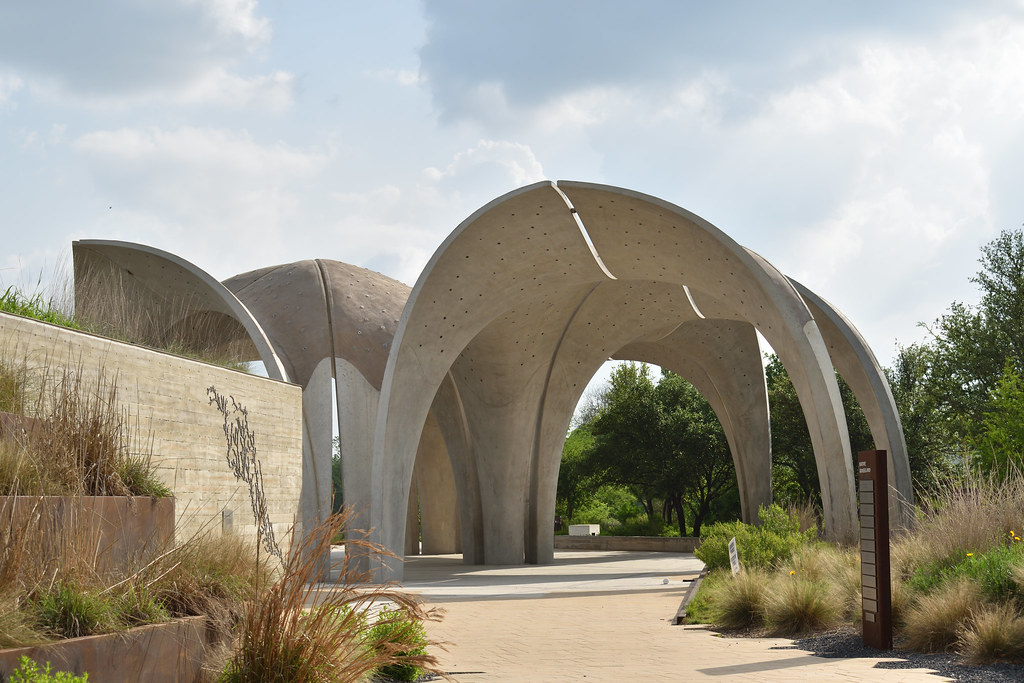
An international celebration took place today at Confluence Park in San Antonio to commemorate the opening of the North American Friendship Garden. The garden is a collaborative effort by the Consulate of Canada in Texas and the Consulate of Mexico in San Antonio together with the City of San Antonio, San Antonio River Authority (River Authority), and San Antonio River Foundation (River Foundation). The public is invited to visit the park to view the garden’s features and learn about the significance of this joint effort.
Located within Confluence Park, an award-winning environmental education park along the banks of the San Antonio River, the pollinator garden is designed to provide a sanctuary for Monarch Butterflies during their international migration, as well as crucial habitat for myriad other pollinators and migratory species. The garden area is approximately 2,500 square feet and includes native grasses, wildflowers, trees, and shrubs. The River Foundation also worked with San Antonio artist Gary Sweeny to create two art benches. Visitors can also view a bug hotel and enjoy locations for thoughtful contemplation and environmental education.
“The Mission Reach of the San Antonio River Walk is a shining example of urban ecosystem restoration that was made possible through the successful collaboration of multiple entities and the North American Friendship Garden is yet another example of the great things that can be accomplished when we all work together for a common goal,” said River Authority General Manager Derek Boese. “We are excited for the public to learn about the important role pollinators play in our environment which we hope will inspire them to become good stewards for our creeks and rivers.”
The idea for the North American Friendship Garden started taking place following the UNESCO designation of San Antonio as a Creative City of Gastronomy, making the city part of UNESCO’s Creative Cities Network. The City of San Antonio World Heritage Office supports this initiative as pollinators play an important role in the food that we consume, and the San Antonio River serves as a corridor for pollinators like the Monarch Butterfly. The garden is in the heart of the important Central Flyway, supporting the iconic Monarch Butterfly as well as other pollinator and migratory species as they travel between Canada and Mexico using San Antonio as a rest stop. In May of 2020, San Antonio was designated a U.S. Pioneer in the recently initiated CitiesWithNature international platform. CitiesWithNature convenes local governments around the world who prioritize nature-based solutions to climate change, recognize ecosystem services, and provide equitable access to nature and the outdoors.
“Working collaboratively, San Antonio partners can be proud of a legacy of conservation and natural resource protection. From the Edwards Aquifer, to the Bracken Cave Preserve, to the Hardberger Park Land Bridge, and now the North American Friendship Garden, we are investing in natural solutions that support our native wildlife,” said Mayor Ron Nirenberg. “I am grateful to our neighbors who are joining us in this effort to ensure a sustainable future for all.”
“The Consulate General of Canada in Texas is proud to have played a role in conceiving and supporting the North American Friendship Garden, a great symbol of the commitment of the people of Canada, Mexico, the United States, and San Antonio to preserve and protect the flyways of the Monarch Butterfly and other pollinators and birds that link all of us throughout North America,” Dr. Rachel McCormick, Consul General of Canada, said.
“For the Government of Mexico, it is crucial to strengthen trilateral cooperation between Canada, the United States, and Mexico. Our three countries are more than just neighbors; we are partners, allies, and, above all, friends,” said Consul General Rubén Minutti Zanatta. “If we continue working together, boosting cooperation, both at the federal, and especially, at the local level, engaging cities, towns, counties, and communities of all kinds, we will ensure the protection of our shared environments, our biodiversity, and wildlife.”
“Confluence Park was created to help educate visitors on our native habitats and the importance of protecting our natural resources for future generations,” said River Foundation Executive Director Frates Seeligson. “We are extremely grateful to our partners and donors for making this garden a reality as it’s a wonderful compliment to the park’s mission and purpose.”
In addition to the international flair surrounding the grand opening of the North American Friendship Garden, Governor Abbott’s Texas Economic Development & Tourism Office provided a ceremonial document to help commemorate this special occasion in San Antonio.
People for our planet
A new dashboard shows just how many people, businesses, cities and countries around the world are speaking up and acting for nature. Compiled by the #VoiceForThePlanet coalition.
The City of London Green City Briefings are a forum to learn and discuss the worldwide adoption of living green in cities as a result of compelling evidence of the benefits for city resilience and citizen health and wellbeing. The Briefings are a series of 8 one-hour webinars that present compelling evidence and examples of the power of ‘living green’ in delivering multiple solutions to city challenges. These briefings aim to provide the latest evidence for the benefits of plants in creating liveable, resilient cities and present practical examples of how these benefits are realised.
The living-in.eu platform was launched during the CITYxCITY Festival and
creates the conditions to upscale digital solutions based on iconic projects. Living-in.eu is
a bottom-up movement which has the ambition to have a positive impact on the quality
of life of at least 300 million European citizens by 2025. The initiative is a cooperation of
Eurocities, Open & Agile Smart Cities (OASC), European Network of Living Labs (ENoLL)
and is supported by the European Commission and the European Committee of the
Regions. The platform will enable Cities & Regions to work together on societal
challenges with the help of digital solutions. Through iconic projects, such as Urban
Digital Twins, the Citizen Card and Urban Data Platforms, cities & regions are able to
develop and implement the solution on a local level.
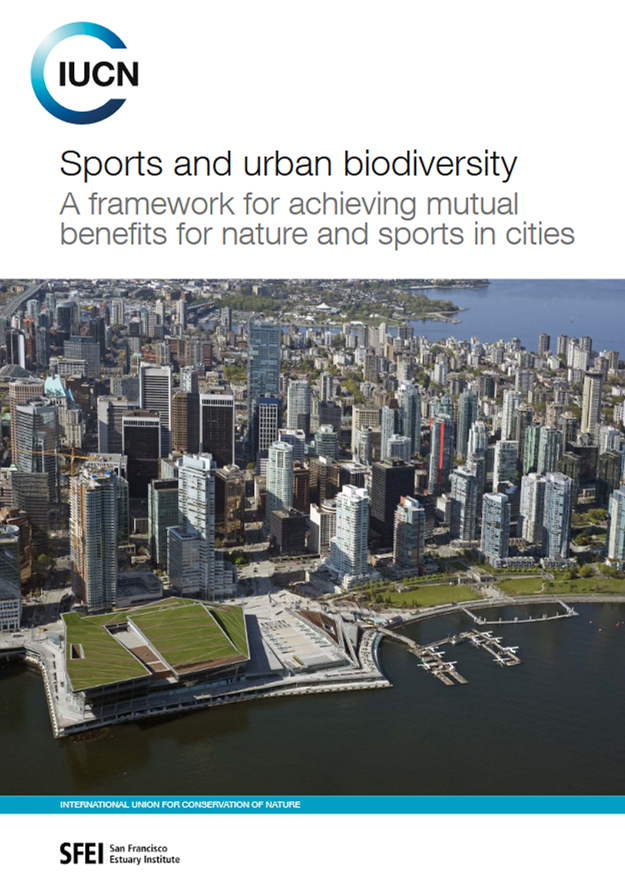
A new guide published by the International Union for Conservation of Nature (IUCN), in collaboration with the International Olympic Committee (IOC) and the San Francisco Estuary Institute (SFEI), identifies key ecological criteria that city officials and sports venue developers can apply to incorporate the needs of nature in their planning.
Organization(s):
Abstract:
Investing in nature and nature-based solutions is an important pathway to address the current ecological crisis. The loss of biodiversity, with around one million animal and plant species threatened with extinction, is putting at risk our economies, livelihoods, food security, health, and quality of life worldwide. Diverse and innovative measures are needed to reverse this decline and to restore healthy ecosystems. The magnitude of the challenge calls for the collaboration and contribution of all actors, including non-state actors, such as businesses, local authorities, civil society organisations, and individual citizens. Sports and urban biodiversity identifies the opportunities for sports federations and sport venue owners and operators to develop the seven elements essential for supporting nature in cities. Case studies from Europe, North America, Australia and South Africa capture the biodiversity actions taken by a variety of sports, from Olympic city planning to local projects at stadiums and practice facilities. These examples also reveal ways in which improvements to urban biodiversity elements can offer a better sporting experience for event participants and spectators.
As we celebrate World Environment Day, many of us isolated at home, the COVID-19 pandemic provides a sobering opportunity to reflect on our relationship with nature.
Nature provides us with essential life-supporting services such as food, clean water, medication and habitats. Healthy and diverse ecosystems contribute to making our communities more resilient. Countless studies have also demonstrated that interacting with nature positively impacts our mental and physical health and well-being, helping to alleviate stress and anxiety, especially prevalent at this time.
Yet, according to the Intergovernmental Science-Policy Platform on Biodiversity and Ecosystem Services (IPBES), biodiversity continues to decline in every region of the world, significantly reducing nature’s capacity to contribute to people’s well-being. This alarming trend endangers economies, livelihoods, food security, and quality of life of people everywhere. And our troubled relationship with nature makes us more vulnerable to hazards, such as extreme climate events and pandemics.
It is time to reimagine humanity’s relationship with nature.
Governments around the world, citizens from all walks of life, economists, scientists, we all need to rethink how we can do things differently. The current pandemic, sadly, provides us with an opportunity to do so.
As for cities, we are already in this mindset and on this path. We redesign streets to facilitate active transportation and reduce our carbon footprint. We rethink the use of public space, to make it more enjoyable, accessible to all, and functional. We bring nature back into our rapidly urbanizing world, by creating parks and involving citizens in the protection of wildlife, such as creating corridors for the migration of the amazing monarch butterfly across North America.
By planning our cities with nature, we can improve quality of life now and lay the ground for a sustainable future for the next generations.
We are not only dreaming the city of tomorrow – we are building it now, integrating nature-based solutions in our development approach.
As we grapple with massive challenges, let us not return to business as usual.
Together, let’s take strong action to create vibrant and equitable communities, where people and biodiversity can thrive, in urban areas as well as around the world.
Let’s rally for the planet and for ourselves, by living in harmony with nature
Valérie Plante
Mayor of Montréal
ICLEI’s Global Ambassador for Local Biodiversity
Ashok Sridharan
Mayor of Bonn
President of Local Governments for Sustainability (ICLEI)
Michael Müller
Governing Mayor of Berlin
President of the World Association of the Major Metropolises (Metropolis)
Park Won Soon
Mayor of Seoul
Co-President of the Global Social Economy Forum (GSEF)
Mohamed Boudra
Mayor of Al Hoceima
President of United Cities and Local Governments (UCLG)
Oscar Rodriguez
Mayor of Asuncion
President of Mercociudades
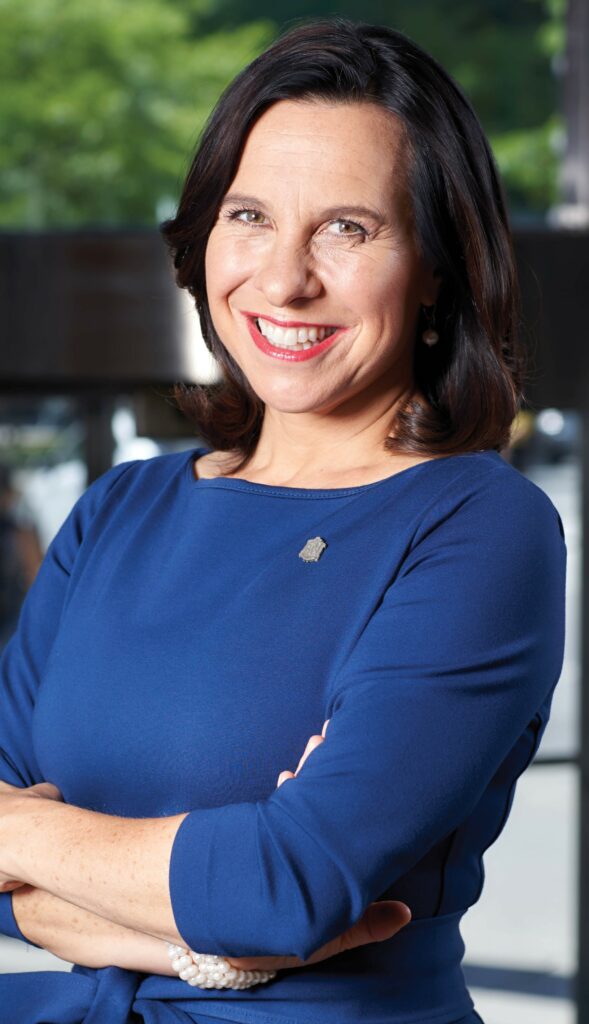
On the occasion of International Day for Biodiversity on 22 May, Valérie Plante, Mayor of Montreal and ICLEI Global Ambassador for Local Biodiversity, penned a compelling letter, calling on mayors and leaders of local and subnational governments from around the world to jointly take urgent action to halt and reverse the trends of biodiversity loss. She points out that the COVID-19 pandemic provides a sobering opportunity to reflect on our relationship with nature.
In the letter, Mayor Plante also draws attention to the unique opportunity to act in the coming year, firstly in developing COVID response plans, and secondly as the local and subnational government constituency prepares for the 15th Conference of the Parties (COP) of the UN Convention on Biological Diversity (CBD). It is at COP 15 where the Parties will adopt the Post-2020 Global Biodiversity Framework (GBF), and it is critical that local and subnational governments are positioned as central to its implementation.
Local and subnational governments around the world are making ambitious commitments to conserve, restore, and live in harmony with nature in the coming decade. As a proud pioneer of the CitiesWithNature partnership initiative, Montreal is among over 150 front running cities and regions who are raising their ambition in support of the Post-2020 GBF. However, these ambitious commitments need to be met with the same level of action when it comes to implementation. Furthermore, this action needs to be captured as collective contributions to achieving the global biodiversity agenda.
On the occasion of World Environment Day, Montreal leads by example once again and demonstrates how their biodiversity actions are linked to the action targets in the CBD’s Zero Draft of the Post-2020 GBF.
“By planning our cities with nature – through nature-based solutions, green infrastructure and green open spaces – we can dramatically improve the quality of life for all. We need to halt and reverse the trends of biodiversity loss and take the path of Living in Harmony with Nature. On this World Environment Day, I call upon cities all over the world to become CitiesWithNature and to share their good practices, as Montreal is doing, to create a dynamic community of practice! Let’s take strong action to create vibrant cities and ensure a healthy planet, where people and biodiversity can thrive.”
~ Valérie Plante, Mayor of Montreal and ICLEI Global Ambassador for Local Biodiversity
The six good practice sheets below, compiled by Montreal, each present a key initiative of interest for the protection of biodiversity that is being implemented by the city, provide advice to facilitate the replication of the initiatives in other cities, and indicate which of the Post-2020 global biodiversity targets the initiative contributes to achieving. The sheets are a source of inspiration that showcase local and subnational leadership in the global biodiversity arena.
The launch of this initiative by Montreal, with support from the ICLEI Cities Biodiversity Center, the CitiesWithNature partnership initiative, and the Secretariat to the CBD, is timely. It stands as a further demonstration of the critical role of local and subnational governments in the CBD, and offers a blueprint for other cities and regions to demonstrate how they are achieving their biodiversity commitments. No action is too small. Instead, collective local action is our best chance at achieving global impact. Montreal is calling on other cities to join the journey to create vibrant cities, where people and biodiversity can thrive. Mayor Plante and the City of Montreal encourage other cities to develop similar resources that demonstrate their commitments in action, as well as the linkages between their local initiatives and global biodiversity targets.
As momentum builds towards COP 15, we need to think globally, and act locally! Global biodiversity targets need to be translated to the urban context to ensure that urban dwellers can enjoy the benefits of nature in their lives. Turning commitments into concrete action is critical now, more than ever before. Montreal’s initiative is an invitation to join a community of practice of local and subnational governments who stand ready to implement the Post-2020 GBF.
You can access the good practice sheets below:
Sheet 1: Ecosystem Management
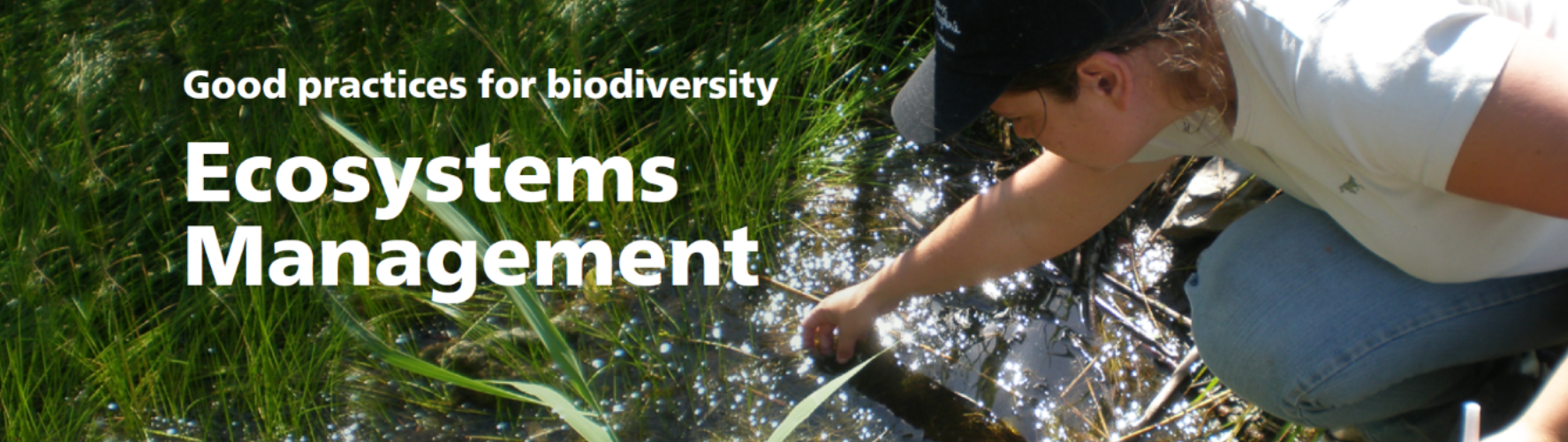
The Ecosystems Management Program in Montreal’s major parks, preserves an essential balance between the protection of environmental integrity and general public access to sites, so that citizens can continue to enjoy the physical and psychological health benefits of nature. Inventories of the flora and fauna are maintained in order to paint a portrait of the major parks’ ecosystems. Through data collection and database management, the City monitors changes within habitats in order to intervene appropriately. When planning the development of a recreational space, such as a trail, the ecosystems portrait allows informed decision-making. Various management actions are carried out in response to the inventories, such as the removal of invasive alien plants and the subsequent planting of native vegetation.
This initiative contributes to the 2030 Action Targets of the Zero Draft of the Post-2020 Global Biodiversity Framework, particularly:
- target 2, concerning the protection of biodiversity through a network of protected areas
- target 3, concerning the control of invasive alien species
- target 6, concerning climate change mitigation and adaptation
- target 10, concerning increased public access to green spaces and ecosystem services
- target 13, concerning the integration of biodiversity protection into planning processes
- target 18, concerning the availability of reliable and up-to-date information for effective management
- target 20, concerning the promotion of sustainable behaviours
Sheet 2: Conservation of Wildlife Trees
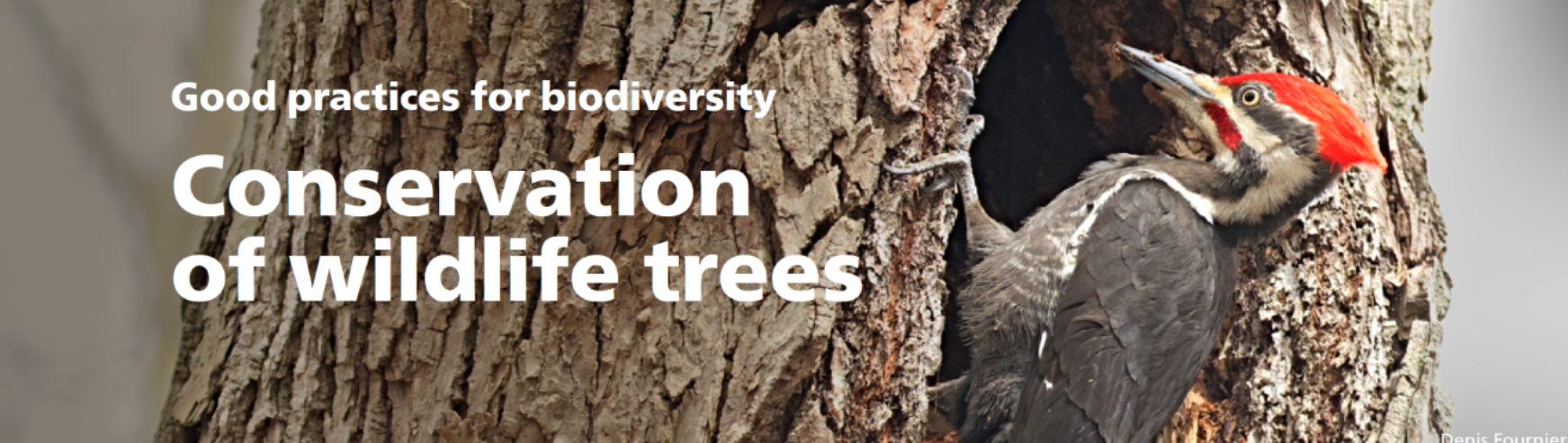
The holes, decomposing wood, and bare branches of Montreal’s trees, both dead and alive, serve as roosts and shelters, as well as feeding and reproduction sites, for a wide range of biodiversity. Woodpeckers, owls and other birds of prey are wildlife trees’ main occupants, but squirrels, raccoons and voles are also found there. In its nature parks, the City preserves wildlife trees and keeps parts of their main branches safely in place. This ensures that the trees can provide this supporting service for wildlife for 20-30 years before decomposing and returning to the earth. The City aims to densify the number of wildlife trees per hectare to support nesting birds and vary the species, sizes, diameters and stages of decay of these trees to promote biodiversity.
This initiative contributes to the 2030 Action Targets of the Zero Draft of the Post-2020 Global Biodiversity Framework, particularly:
- target 2, concerning the protection of biodiversity through a network of protected areas
- target 6, concerning climate change mitigation and adaptation
- target 10, concerning increased public access to green and blue spaces and ecosystem services
- target 13, concerning the integration of biodiversity protection into planning processes
- target 18, concerning the availability of information
Sheet 3: Coexisting with Coyotes
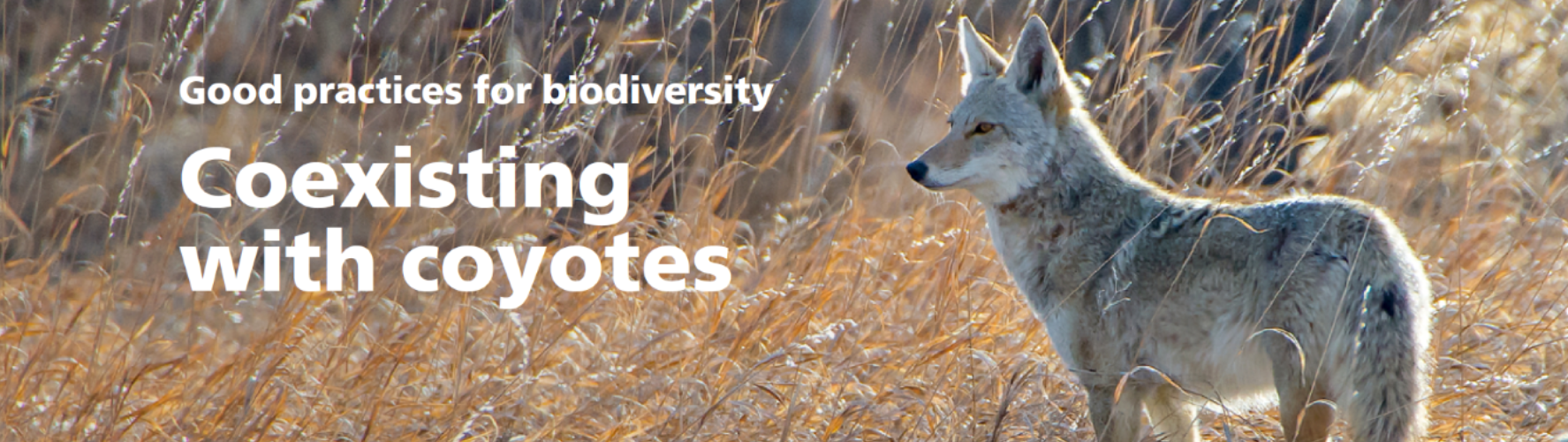
Coyotes are very discreet and seek to avoid human confrontation. However, the expansion of coyote territory has resulted in an increased presence of the native species in North American urban areas. In 2017, coyotes were observed in Montreal’s neighbourhoods, causing some concern among residents. To ensure that humans live in harmony with nature in Montreal, a joint action committee was quickly established and a coyote management plan was created. Based on best practices and leading-edge scientific knowledge, its goal is to promote safe coexistence with the coyote. Communication is central to the plan, as well as scientific data collection to better understand the coyote’s behaviours and movements.
This initiative contributes to the 2030 Action Targets of the Zero Draft of the Post-2020 Global Biodiversity Framework, particularly:
- target 7, concerning the sustainable management of species and the reduction of human-wildlife conflict
- target 13, concerning the integration of biodiversity protection into planning processes
- target 18, concerning the availability of reliable and up-to-date information for effective management
- target 20, concerning the promotion of sustainable behaviours
Sheet 4: Environmental Action Days
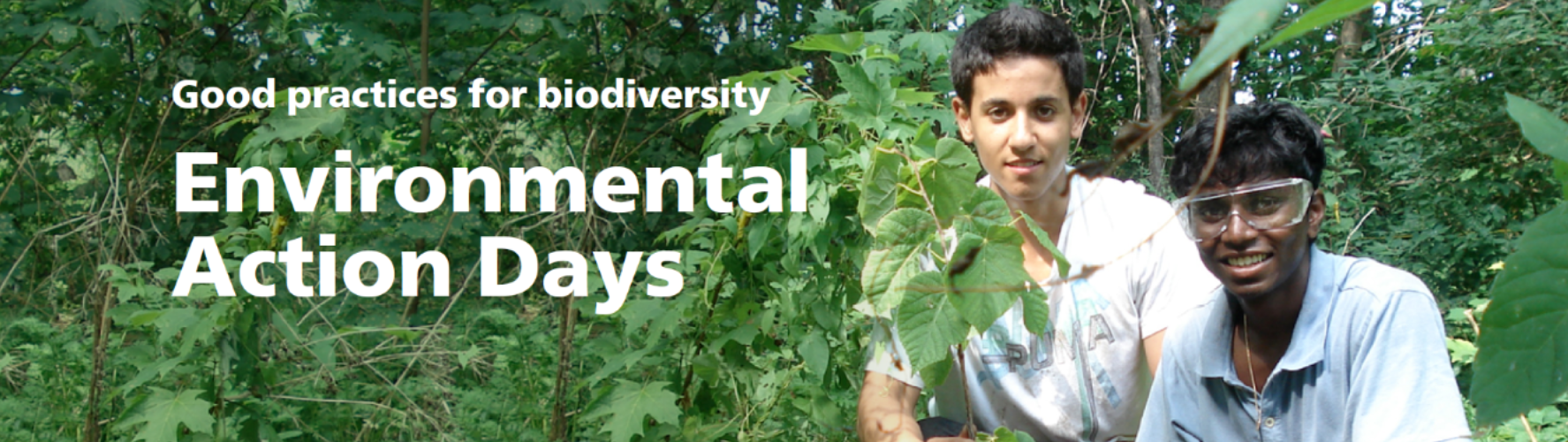
The City of Montreal hosts environmental action days in their major parks. These days are designed to engage citizens through concrete action and collective effort. Citizens who take part in these days have an opportunity to contribute directly to the protection of ecosystems in their major parks, while acquiring new knowledge. Mentored by City of Montreal experts, the participants – volunteers of all ages – contribute to picking up garbage left behind, controlling invasive plant species and planting native vegetation, based on the day’s objective.
This initiative contributes to the 2030 Action Targets of the Zero Draft of the Post-2020 Global Biodiversity Framework, particularly:
- target 2, concerning the protection of biodiversity through a network of protected areas
- target 3, concerning the control of invasive alien species
- target 4, concerning pollution reduction
- target 10, concerning increased public access to green and blue spaces and ecosystem services
- target 20, concerning the promotion of sustainable behaviours
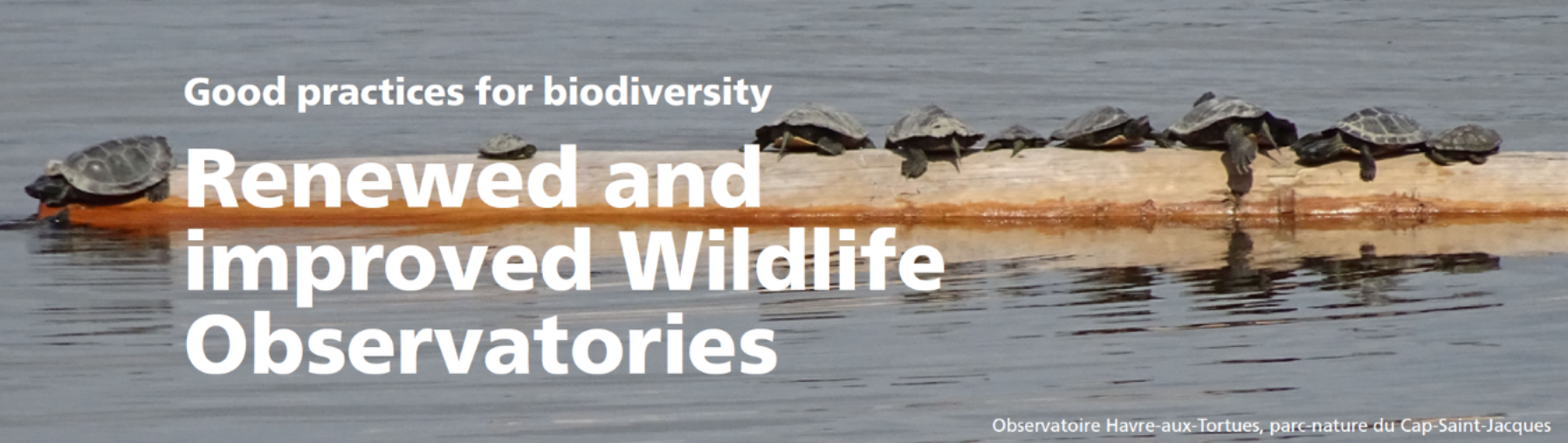
Sheet 5: Renewed and Improved Wildlife Observatories
Montreal has been redeveloping wildlife observatories in its nature parks in the past few years. Promoting collaboration among experts to design facilities that embody principles of sustainable design and construction, while respecting wildlife and environmental imperatives, these facilities allow citizens to observe the surrounding wildlife without disturbing it, thanks to a wall equipped with viewing slots arranged at varying heights to accommodate visitors of all ages and physical conditions. The redevelopment of these observatories also provides opportunities to plant native vegetation and improve the biodiversity of the surrounding area.
This initiative contributes to the 2030 Action Targets of the Zero Draft of the Post-2020 Global Biodiversity Framework, particularly:
- target 2, concerning the protection of biodiversity through a network of protected areas
- target 3, concerning the control of invasive alien species
- target 10, concerning increased public access to green spaces and ecosystem services
- target 13, concerning the integration of biodiversity protection into planning processes
- target 17, concerning the promotion of sustainable behaviours
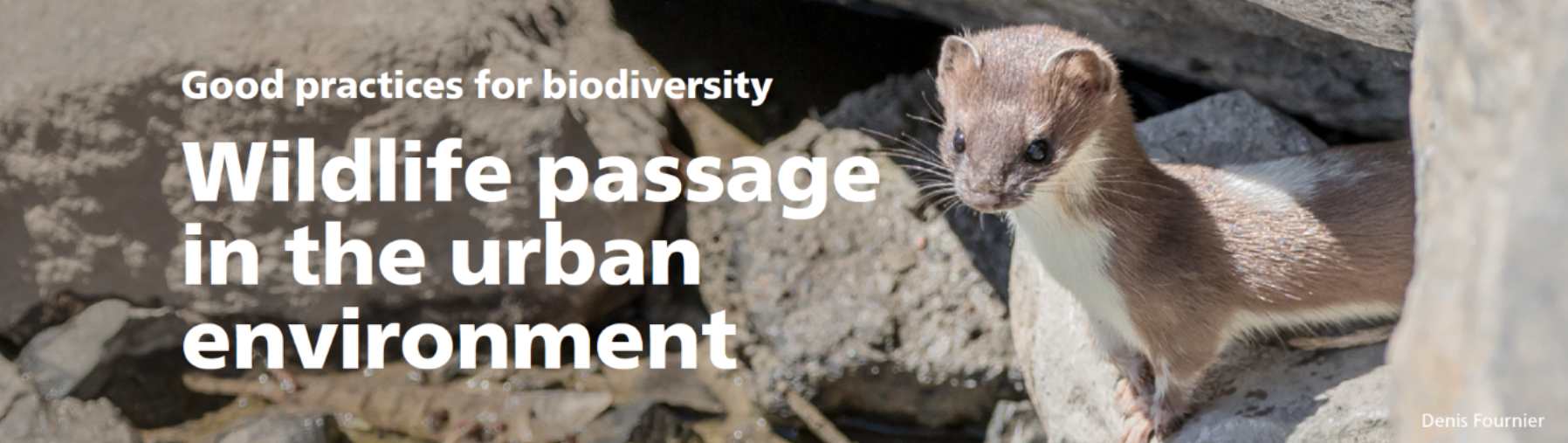
Sheet 6: Wildlife Passages in the Urban Environment
Montreal has created a wildlife passage under a Boulevard that is currently being extended through a green corridor to restore habitat quality and enhance connectivity. The Boulevard has, over the past few years been under construction and now runs through a portion of the city’s eastern green belt. This corridor houses significant natural environments including a wooded border and wetlands. The wildlife passage is a 26-metre-long, culvert-type, two-level wildlife passage that was created under the boulevard as part of the construction process. A raised walkway allows species the choice of staying out of the water. Furthermore, approximately 600 native shrubs have been planted to block the incursion of reeds and enhance the area’s biodiversity. Through infrared camera technologies, Montreal has demonstrated the use of the culvert and its surrounding vegetation by a range of species, including the long-tailed weasel and the eastern milk snake.
This initiative contributes to the 2030 Action Targets of the Zero Draft of the Post-2020 Global Biodiversity Framework, particularly:
- target 1, concerning land management to promote connectivity and environmental integrity
- target 3, concerning the control of invasive alien species
- target 13, concerning the integration of biodiversity protection into planning processes
- target 18, concerning the availability of reliable and up-to-date information for effective management